Locally-owned rat, mouse, and roof rat removal across Bibb County and Middle Georgia. Inspection, exclusion, and follow-up. The plan is built for Macon. Older homes. Mature canopy. A year-round warm breeding season.
Macon Rodent Control is a locally-owned rat and mouse removal company. We serve Bibb County and the surrounding Middle Georgia region. We handle Norway rats, roof rats, and house mice. Our treatment approach is built for Macon. That means humid subtropical climate. It means mature pecan-and-live-oak canopy. And it means a mix of historic Vineville bungalows, Ingleside colonials, and newer suburban homes off the Ocmulgee corridor. Founded in 2023. Based at 3180 Vineville Ave. Open 24/7. Same-day inspections are standard. Every job ends with sealing the entry points, so the problem doesn't come back next season.
The fastest paths to a clean home. We offer 28 services. They cover everything from emergency removal to attic cleaning and bait-station work.
Same-day response across Bibb County. Open 24/7 for active infestations, after-hours wall-cavity calls, and rentals that need a fast turnaround before guests arrive.
Service detailsRodent pressure in Middle Georgia is its own thing. The mature pecan and live-oak canopy defines Vineville, Ingleside, and Shirley Hills. It gives roof rats a direct highway into older attics. Every overhanging branch is an access point. The Ocmulgee River corridor runs through East Macon and Fort Hill. It drives Norway rat activity along its banks year-round. After heavy rain, it pushes them upland into homes.
Macon's housing stock matters too. The early-1900s bungalows and colonials in the historic districts have several weak spots. Wood-shingle ridge vents. Soffit gaps. Unfinished knee-wall cavities. Crawl space access. Newer building simply doesn't have these. A treatment plan that works on a 2010 build in Wesleyan Woods will fail on a 1915 Vineville home, and we build the plan so.
And because we're subtropical, there's no real "off season." Mice breed year-round in Macon. The Cherry Blossom Festival brings short-term-rental pressure every March. The summer humidity drives crawl space activity. The fall cold snaps push roof rats deeper into attics. Local knowledge isn't decorative, it's the difference between a treatment that holds and one that doesn't.
Three of our most-called Macon neighborhoods. Full list of 37 service areas, 19 Macon neighborhoods plus 18 nearby Georgia towns within ~45 minutes, is on the Areas page.
Cherry Street's restaurant corridor, mixed-use buildings, and tight-alley Norway rat pressure. We run commercial and residential programs across the downtown core.
Service details
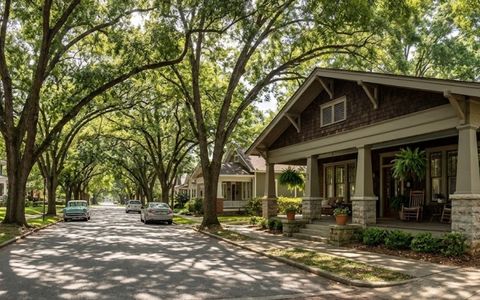
Historic bungalows and colonials sit under mature pecan canopy. That's the classic Macon roof-rat profile. Heritage-friendly sealing without disturbing original building.
Service detailsIngleside Village's older housing stock and tree-lined streets generate steady rodent calls year-round. Crawl space and attic work is our daily bread here.
Service detailsNorway rats, roof rats, and house mice each behave differently, and each needs a different treatment approach. Macon sees all three, often in the same season.
| Trait | Norway rat | Roof rat | House mouse |
|---|---|---|---|
| Typical size | 10–12 in body + tail | 7–10 in body + tail | 3–4 in body + tail |
| Where it nests | Burrows, crawl spaces, basements | Attics, upper walls, tree canopy | Wall voids, cabinets, garages |
| Common Macon trigger | Ocmulgee corridor, downtown alleys | Mature pecan and live-oak canopy | Year-round household entry |
| Peak season | Fall through winter cold snaps | Late summer through winter | Year-round (subtropical climate) |
| Common entry points | Foundation gaps, garage thresholds | Roof returns, soffit vents, dormer joints | Pipe penetrations, dryer vents, garage corners |
The same process runs on every job. Single-family home. Restaurant. Warehouse. Short-term rental. What varies is the depth at each step, not the steps themselves.
Full walk of the property, roofline, attic, crawl space, foundation, utility penetrations, garage thresholds, and the perimeter. We map every gap larger than a dime.
Species confirmation matters because Norway rats, roof rats, and house mice each need different treatment. Droppings, runways, gnaw patterns, and entry-point evidence tell us which.
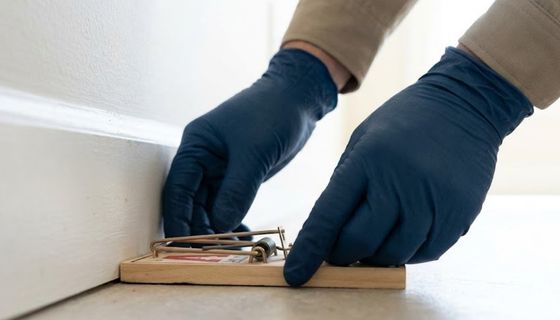
Targeted removal uses methods that fit the situation. Snap traps inside. Exclusion-first work in attics. Tamper-resistant bait stations for outside commercial work.
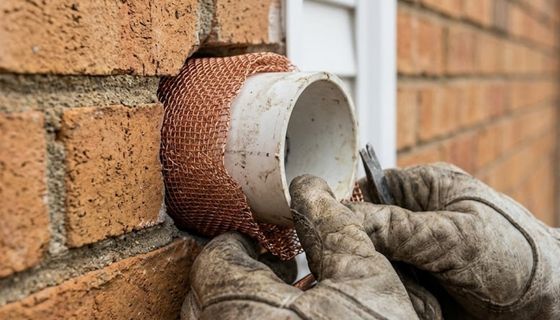
Every gap sealed with rodent-grade materials, copper mesh, hardware cloth, sealants. Follow-up inspection scheduled to verify no return activity before we close the job.
Same-day inspections are standard for active infestations across Bibb County. Calls placed before 9 a.m. usually get an inspection that same afternoon. Outer-county addresses (Warner Robins, Forsyth, Milledgeville) may run a day longer in peak season.
Three species drive almost every call: roof rats (most common in mature pecan and live-oak neighborhoods like Vineville and Ingleside), Norway rats (concentrated near the Ocmulgee corridor and commercial alleys downtown), and house mice (year-round across every neighborhood thanks to Macon's subtropical climate).
Yes. Pre-1970s Macon housing, Vineville bungalows, Ingleside colonials, North Highlands ranches, almost always has crawl space access. We carry the gear to enter, inspect, and seal foundation gaps, soffit vents, and utility penetrations without disturbing the original building.
Yes. We default to snap traps and exclusion work for interior infestations because they're faster and avoid the wall-cavity decomposition risk that rodenticides create. When bait stations are right (commercial exterior, warehouses, storage units), they're tamper-resistant and placed where pets and kids can't reach them.
Yes. Our service area covers Bibb County plus adjacent Georgia towns within about a 45-minute drive. Warner Robins, Byron, Perry, Centerville, Fort Valley, Forsyth, Gray, Milledgeville, and more. See the Areas page for the full list with response times by town.
Standard residential treatment runs $250 to $1,800 depending on infestation severity and the amount of exclusion work needed. A basic single-visit treatment with limited sealing sits at the low end. Full attic decontamination plus full exclusion on an older home with a mature canopy reaches the upper end. Inspections are free.
See all 37 service areas (including Warner Robins, Perry, Forsyth, Milledgeville) →