Technician note
Kings Park is post-war crawl space territory. The standard issue is mudsill settling combined with 60+ years of foundation vent corrosion. Effective exclusion requires entering the crawl space — not just visually inspecting from outside.
Kings Park's rodent profile
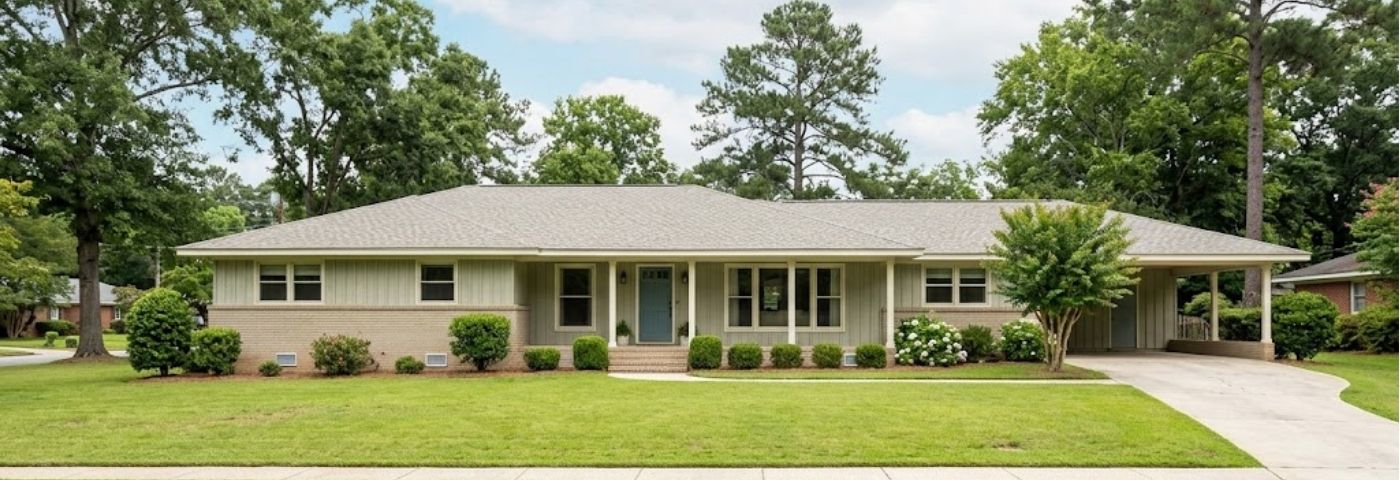
Kings Park is a post-war Macon residential neighborhood. Most housing is from the 1950s through the 1970s. Same era as North Highlands, Avondale, and the outer sections of Bellevue. The rodent profile that comes with this building era is consistent across all of these neighborhoods: house mice are the year-round baseline, sustained by mature landscaping and the gap inventory that accumulates over 50–70 years of settling, corrosion, and normal building wear; Norway rats are a secondary presence in the crawl space homes where mudsill settling and corroded foundation vents provide below-grade access; and roof rats are uncommon without major canopy density, which varies by block in Kings Park.
Kings Park has the classic Macon suburban rodent profile. It's not the sharp roof rat pressure of a Vineville bungalow. It's not the Ocmulgee-driven Norway rat surge of East Macon. It's the steady, year-round, multi-entry-point mouse problem. That problem affects nearly every post-war Macon home that hasn't been fully sealed. The house mouse population in Kings Park's landscaping doesn't diminish in winter, doesn't wait for a seasonal trigger, and finds the gaps in aging foundation vent screens and unseal dryer vent rings year-round. The solution is the same here as throughout this era's Macon housing stock: a thorough inspection to document every entry point, mechanically-fastened sealing with climate-right materials, and a follow-up inspection to confirm the work holds.
Crawl space conditions in Kings Park
Post-war Kings Park homes with crawl spaces show the predictable aging patterns of this building era in Macon's high-clay soil: mudsill gaps at the sill-to-foundation junction from decades of soil movement, corroded aluminum or galvanized foundation vent screens, and pipe penetrations through the crawl space walls that were installed without sealant. The combination of these gaps with Macon's consistently high humidity beneath unencapsulated crawl spaces makes Kings Park crawl spaces comfortable nesting environments for both mice and Norway rats. We enter every Kings Park crawl space on every inspection, the most major entry points in this building era are usually visible only from inside.
Services we provide in Kings Park
| Aspect | Kings Park profile |
|---|
| Construction era | Post-war ranch |
| Dominant pressure | Aging utility penetrations |
Frequently asked questions. Kings Park rodent control
Response time for a Kings Park address?
Same-day on calls that come in before mid-afternoon. Dispatch is at (844) 635-0403.
What rodent profile does Kings Park show?
Post-war ranch home profile: foundation-zone mouse entry is the main issue, plus Norway rats in homes with established crawl space access. Roof rats appear only on the few blocks with mature canopy.
Is the Kings Park inspection free?
Yes. We walk all five zones, document each entry point, and leave you with a written report — no charge, no obligation.