Technician note
Fort Hill homes face Norway rats from the Ocmulgee corridor and house mice year-round from established residential landscaping. The combination means our inspection always covers both at-grade and interior-baseboard zones, not just one or the other.
Fort Hill's rodent landscape. Ocmulgee-adjacent Norway rat pressure
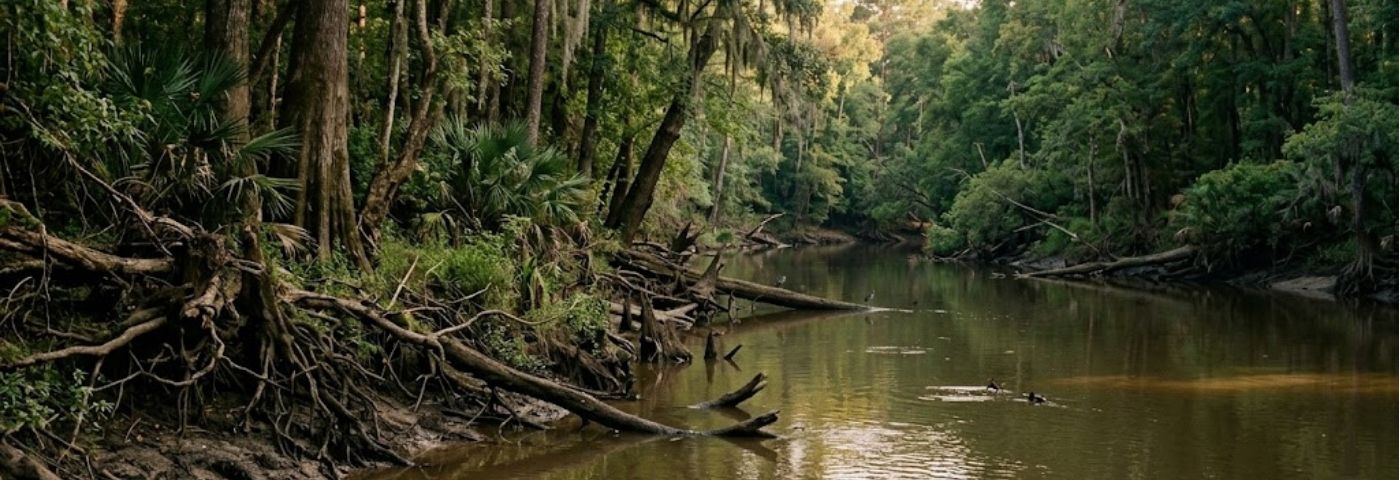
Fort Hill shares the Ocmulgee River corridor exposure that makes East Macon Bibb County's highest Norway rat pressure zone. But the housing mix is a bit different. Fort Hill's residential streets include a higher proportion of post-WWII ranch homes alongside the older bungalow and shotgun house stock common in East Macon, which means the crawl space situation in Fort Hill ranges from the very permeable (pre-1950 homes with decades of settling on clay soil) to the moderately better-sealed (1950s–1960s ranch building with aluminum foundation vents that have had time to corrode but haven't settled as dramatically). The Norway rat pressure is comparable in both building eras; the entry-point inventory varies.
The lower-elevation blocks of Fort Hill, those closer to the river floodplain, see the same post-flood Norway rat displacement pattern that East Macon does. The 48–72 hour window after a major Ocmulgee rise is the critical response period for Fort Hill homeowners who want to address a displacement event before it becomes an established crawl space infestation. We treat Fort Hill flood-event calls as priority dispatch for the same reason we do in East Macon: the difference between treating a displaced rat population before it nests and treating an established crawl space colony is measured in treatment visits, exclusion complexity, and cleanup work.
Fort Hill's mixed species profile
Unlike Vineville or Ingleside, Fort Hill has a genuinely mixed rodent profile. Vineville and Ingleside are overwhelmingly roof rats. Norway rats from the Ocmulgee corridor are the main species in the crawl space and at-grade zone. Roof rats are a secondary presence in Fort Hill blocks with enough canopy. Several of Fort Hill's older streets have mature tree cover. The cover is enough for roof rat travel. Especially on blocks next to Ingleside. House mice are a consistent third presence year-round, especially in the older housing stock with numerous small-gap entry points. A Fort Hill inspection may identify all three species in different zones of the same property, which affects how the treatment program is designed, you don't address a three-species mixed infestation with a single-species removal approach.
Services we provide in Fort Hill
- Construction era: Mid-century residential stock
- Dominant species: Norway rats headline; mice constant
- Pressure source: Ocmulgee bank colony pressure from south
- Seasonal timing: Norway rat displacement events after rain
Frequently asked questions. Fort Hill rodent control
Do you cover Fort Hill same-day?
Yes. Fort Hill sits within our priority dispatch radius. Call (844) 635-0403 and we'll confirm a window on the line.
What's the Fort Hill rodent profile?
Norway rats are the headline issue here, sustained by the Ocmulgee bank colony just to the south. Mice are constant. Roof rats appear in homes with mature canopy.
Inspection cost for Fort Hill addresses?
Free for the first visit. Full five-zone inspection with written report. The report covers entry points found, species evidence, and recommended treatment scope.