Technician note
Lake Wildwood is unusual: three rodent species press at once. Norway rats from lake-edge bank habitat, roof rats from heavy canopy, house mice year-round from landscaping. The inspection covers all three zones because the property faces all three pressures simultaneously.
Lake Wildwood's unique rodent landscape
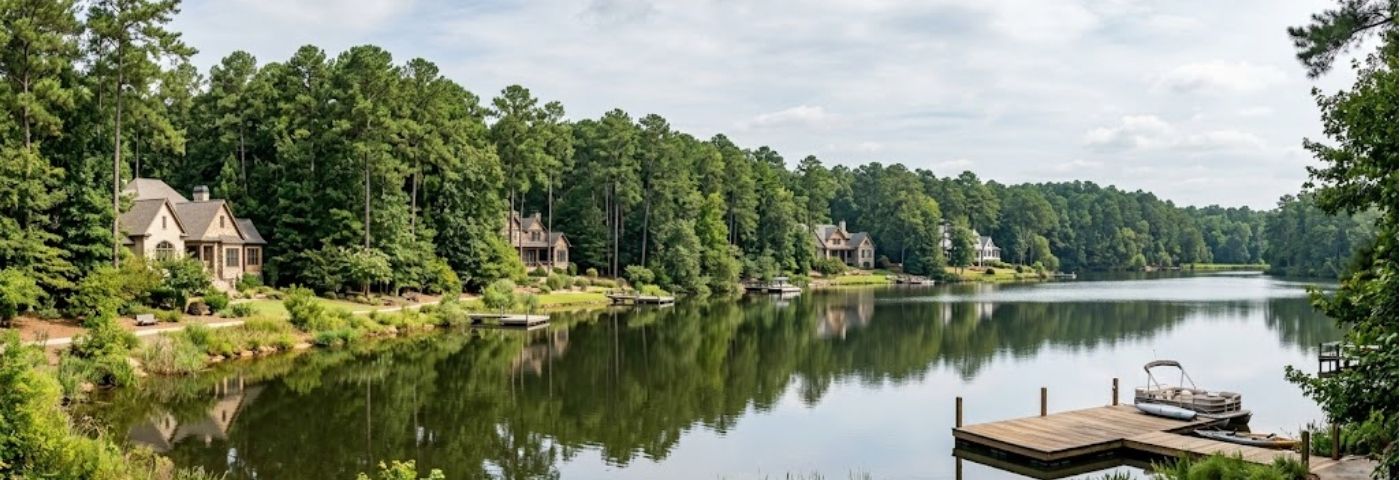
Lake Wildwood is unlike any other Bibb County residential area in its rodent pressure profile. The combination of three things creates higher rodent density than other Macon suburban neighborhoods. A lake-edge environment. Heavily wooded residential lots. A private community system. The lake shoreline provides the soft, elevated-moisture soil that Norway rats favor for bank burrow establishment, the same habitat that drives the Ocmulgee corridor population in East Macon, scaled to Lake Wildwood's private lake perimeter. The wooded lots and established forest canopy provide roof rat aerial access to rooflines on a major proportion of the community's homes. And house mice maintain their year-round presence in the ornamental plantings, leaf litter accumulation, and wood pile environments common in heavily wooded residential lots.
Lake Wildwood homeowners have a somewhat unusual combination of rodent pressures that don't usually co-occur at the same intensity in other Macon neighborhoods: meaningful Norway rat lake-edge pressure, real roof rat canopy pressure on wooded lots, and the baseline year-round house mouse pressure shared by all Macon residential areas. A Lake Wildwood inspection frequently identifies activity from more than one species on the same property, which shapes the treatment and exclusion program a lot.
Lake-edge Norway rat pressure in Lake Wildwood
Some Lake Wildwood homes sit right next to or close to the shoreline. These face Norway rat pressure from lake-edge bank burrows. Norway rats in this setting nest in the vegetated bank above the waterline. They forage into nearby residential lots. They probe building foundations all the time. The seasonal pattern here mirrors the Ocmulgee corridor dynamic in East Macon: precipitation events that raise lake levels or saturate the bank habitat displace Norway rats from their burrows and push them into adjacent structures within 24–72 hours. Lakefront and lake-adjacent Lake Wildwood homeowners seeing sudden foundation probing or crawl space activity after rain events should treat this as a displacement trigger rather than a new infestation from an unknown source.
Wooded lot roof rat pressure
Lake Wildwood's wooded residential lots, especially those with mature pines, oaks, and pecans growing close to the home, provide the same canopy-to-roofline aerial access that drives Vineville's roof rat problem. The scale is different: Vineville's century-old street canopy provides access to virtually every home in the neighborhood, while Lake Wildwood's canopy is lot-specific, homes with large wooded lots close to the structure have roof rat exposure; homes in the community's more open sections have less. The inspection identifies canopy-to-roofline proximity on each Lake Wildwood property and makes trimming recommendations where branches provide access.
Services we provide in Lake Wildwood
Lake Wildwood is the only Bibb County neighborhood routinely facing all three species at once.
- Construction era: Mixed era; lake-adjacent residential
- Dominant species: Three-species pressure: Norway, roof, mice
- Pressure source: Lake bank + wooded canopy + residential baseline
- Seasonal timing: All three species active in different seasons
Frequently asked questions. Lake Wildwood rodent control
Do you serve Lake Wildwood the same day?
Usually yes for early calls; afternoon dispatch is the norm. (844) 635-0403 to schedule.
What makes Lake Wildwood's rodent situation unusual?
Three pressure sources at once: Norway rats from the lake bank habitat, roof rats from the wooded canopy, and the year-round mouse baseline. Most Macon neighborhoods see one or two; Lake Wildwood properties get all three.
Free inspection for Lake Wildwood?
Yes. Full property walk, all five zones, written report at the end. The report identifies pressure sources separately so you understand exactly what's driving activity.