Roof rat attic programs and heritage-compatible exclusion for Ingleside Village's Craftsman bungalows, colonials, and the early-1900s housing stock that makes Ingleside one of Macon's two highest-pressure roof rat neighborhoods.
Same-day InglesideRoof rat specialistsHeritage-compatible exclusion
Technician note
Ingleside's housing dates 1910-1940, which means balloon framing on most homes. Traps need to go at three levels simultaneously: attic, mid-wall, and crawl space. A first-floor trap line alone misses the population traveling vertically through the wall voids.
Ingleside's rodent landscape
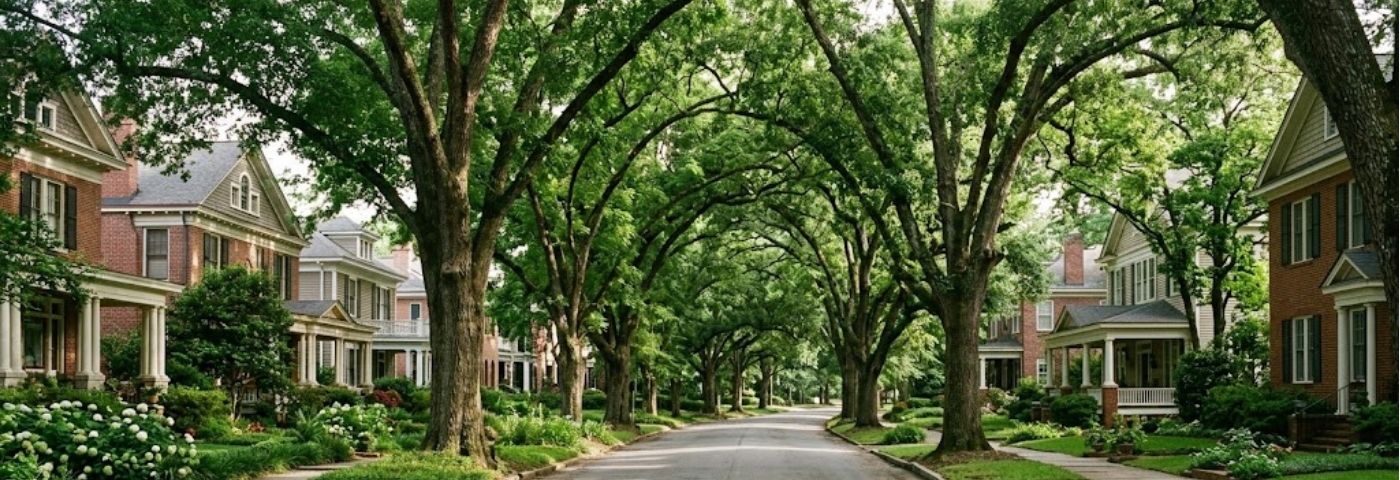
Ingleside and Vineville share Macon's highest roof rat pressure. The cause is the same in both. Early-1900s building. Mature pecan-and-live-oak canopy. Both define the two neighborhoods. Ingleside Village is the core residential district along Ingleside Ave and its side streets. It was built mostly between 1910 and 1940. The housing mix runs from Craftsman bungalows to larger colonials and 1930s transitional building. Every home type in this range has the roofline vulnerabilities that roof rats exploit: wood-shingle ridge vent systems on pre-1925 homes, open soffit returns under decorative fascia boards, and wooden louver gable vents that have weathered for a century on homes built before aluminum replacement became common.
The Ingleside canopy is like Vineville's. Same pecan and live oak species. Same age. Same effect on rooflines. Branches reach within feet of gable ends and soffit lines. That gives roof rats aerial access. The aerial route removes the ground-level exposure that makes them vulnerable to other control methods. A roof rat traveling from a pecan to an Ingleside roofline never touches the ground. It's not exposed to ground-level trapping. Or yard-level bait stations. Not during that transit. Attic exclusion and canopy management are the primary tools that work here.
Ingleside Village and the Cherry Blossom Festival window
Ingleside is one of the neighborhoods most in demand for short-term rental guests during Cherry Blossom Festival, the walkable streets, historic character, and proximity to Tattnall Square Park make it a Festival accommodation favorite. The collision between this demand and the winter roof rat activity cycle produces Ingleside's highest short-term rental rodent call volume every February and March, reliably. Hosts with properties in Ingleside Village should schedule a February inspection as annual upkeep, not just as a response to evidence. See the Airbnb and short-term rental service page for the pre-Festival program details.
Ingleside building eras, what they mean for treatment
Pre-1925 Ingleside homes are balloon-framed bungalows with continuous wall cavities, trap placement requires three levels simultaneously. 1925–1945 building transitions to early platform framing with more complex rooflines (dormers, hipped returns) that add entry-point complexity without simplifying the trap placement strategy much. Post-1945 ranch and bungalow stock in the outer Ingleside area is platform-framed with aluminum foundation vents and aluminum soffit panels, closer to standard exclusion, though the canopy pressure remains. We check building era on every Ingleside inspection and note it in the written report.
Frequently asked questions. Ingleside rodent control
How soon can someone be at my Ingleside address?
Same-day windows are normal. Ingleside is within ten minutes of our Vineville Avenue base, so dispatch usually books same-morning or same-afternoon depending on when you call. Phone (844) 635-0403.
What's the rodent profile on Ingleside Village properties?
Roof rats lead. The Spanish-revival and Tudor housing stock from the 1920s and 1930s, paired with mature canopy along Pio Nono Avenue and the side streets, gives roof rats reliable roofline access. Mice are baseline in the older crawl spaces.
Do you charge for the Ingleside inspection?
No, the first inspection is free. Five-zone property walk, written findings, identified entry points. No obligation to book treatment afterward.
Original soffit returns under decorative fascia boards are the most common roof rat entry on Ingleside homes.