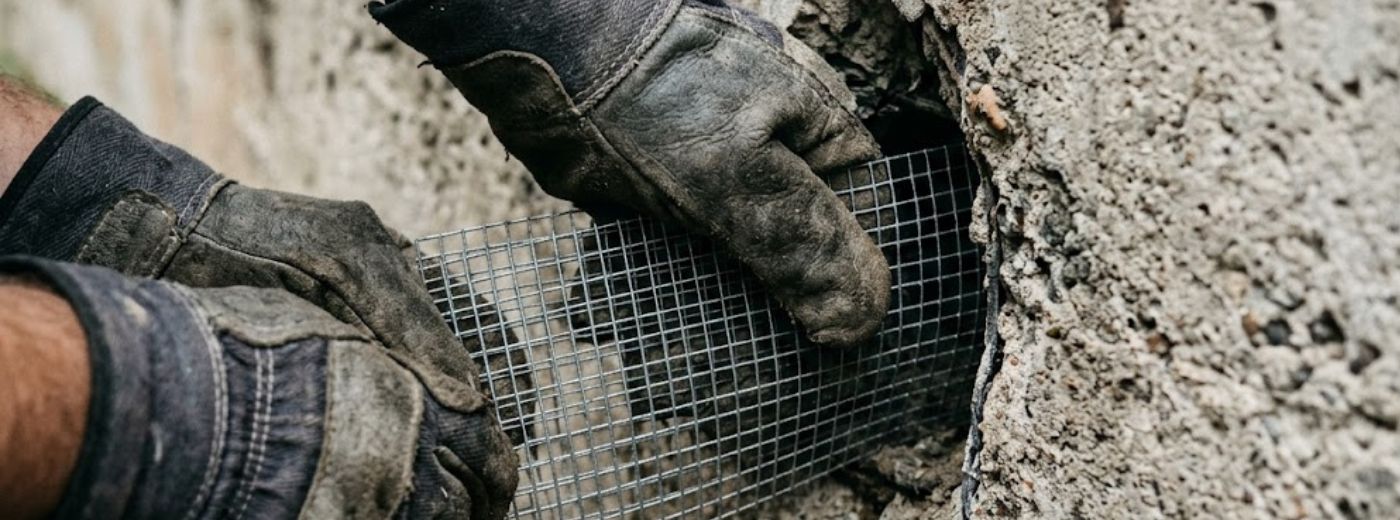
Copper mesh rodent exclusion material being applied to pipe gap on Macon home exterior

Rodent exclusion services in Macon, GA

The half of rodent control most operators rush or skip entirely is exclusion. That means structural sealing of every rat and mouse entry point. We use humidity-rated materials that hold in Bibb County's subtropical climate. With a 90-day warranty and a follow-up inspection to confirm.

Call (844) 635-0403 All services Free Inspection · Same-Day Response · No Obligation
LicensedInsured90-day warrantyHumidity-rated materials

Rodent exclusion service in Macon, GA is the structural sealing work that makes rodent control last. It's the half of the job most pest operators cut corners on. The reason? It takes longer. It needs more material knowledge. It doesn't generate recurring revenue the way a removal-only approach does. Removing the rodents present is the easy half. Sealing the entry points that allowed them in is what sets whether you're calling again in 90 days. Every gap larger than a dime for mice. Every gap larger than a quarter for rats. At every zone, from roofline to foundation. This page covers what proper exclusion in Macon's subtropical climate actually involves, what materials work and which ones fail, and what the job costs.

Why exclusion is the part that actually matters

The outdoor rodent population surrounding any Macon home doesn't go away because you trapped the animals that were inside. The outdoor populations are still there. The Norway rat colony in the Ocmulgee corridor. The roof rat family in the neighbor's pecan tree. The mouse population in the landscaping mulch. They're still probing the perimeter of your home for any gap that gives access. Remove the population inside without sealing the entry points and you've created a vacancy for the outdoor population to refill. The result is re-infestation within 30–90 days, and a call back to the pest operator who didn't do the exclusion work the first time.

Exclusion is also the part of rodent control that compounds over time in Macon's favor. A properly sealed home doesn't need to be re-treated every year, it needs periodic inspection to catch new gaps as the structure ages, canopy grows, or storm damage opens new penetrations. We inspect and document every sealed gap so the follow-up visit can systematically check each one. That records is the difference between exclusion that pays off for years and exclusion that gets re-done unnecessarily.

Materials we use, and why Macon's climate drives the selection

MaterialUse caseWhy it works in MaconWhat we don't use and why
Copper meshPipe gaps, small penetrations ≤2 inchesCompresses to fill irregular gaps, non-corrosive in high humidity, rodents can't chew through itSteel wool, corrodes within 6–12 months in Macon's humidity, loses integrity
19-gauge galvanized hardware clothFoundation vents, gable vents, soffit covers, attic vent replacementRigid enough that Norway rats can't deform it, galvanized coating resists rust in humid conditionsAluminum window screen, corrodes at connections, rodents push through it
Foam backer rod + exterior sealantLarger irregular gaps, wall transitions, conduit entriesBacker rod gives the sealant structural support; exterior-grade silicone or polyurethane rated for subtropical humidity holds without crackingFoam-only seals, compresses and shrinks within one wet season in Macon climate
Sheet metal flashing (26+ gauge)Dormer flashing gaps, chimney-to-roof transitions, downspout terminationsRigid, impermeable, structurally integrated, right for roofline gaps where mesh would be aesthetically or structurally inappropriateThinner-gauge sheet metal. Norway rats can deform and push through anything under 26 gauge
Expanding foam + hardware cloth overlayLarge foundation penetrations, utility chases with complex geometryFoam fills the void, hardware cloth over the face prevents rodents from excavating the foamExpanding foam alone, rats and mice chew through cured foam within days

Entry points we seal, by zone

Roofline zone

Ridge vents, soffit returns, gable vents

Pre-1960s Macon homes have wood-shingle ridge vents, open soffit returns, and wooden louver gable vents, all of which deteriorate and leave gaps. Re-screened with hardware cloth or replaced with rodent-resistant vent covers.

Roofline zone

Dormer flashing, chimney surrounds

Flashing-to-wall gaps at dormers and chimney surrounds are classic roof rat access points on older Macon homes. Sealed with exterior-grade sealant and flashing where needed.

Wall zone

Utility penetrations, HVAC, electric, plumbing

Line-set entries, electrical conduit, cable runs, and plumbing penetrations through exterior walls. Sealed with copper mesh backer and exterior sealant. Dryer vent gaps sealed at the duct-to-wall interface.

Wall zone

Garage door thresholds and wall transitions

Gaps where the garage door threshold meets the floor, and where garage walls meet adjacent structures. Norway rat access point on homes where the garage connects to the crawl space.

Foundation zone

Foundation vents and mudsill gaps

The mudsill-to-foundation block gap on crawl space homes, often the single largest Norway rat entry point in older Bibb County housing, and deteriorated foundation vent screens. Hardware cloth re-screening and copper mesh gap sealing.

Foundation zone

Pipe penetrations below grade

Utility pipes entering below the floor line, especially where they transition from underground conduit to the crawl space. Copper mesh and sealant applied at the wall penetration face.
The exclusion process

1

Full perimeter inspection

Every zone inspected, roofline, wall, and foundation. Written entry-point map documenting each gap: location, size, likely species, and recommended seal material. The inspection report travels with the exclusion crew.

2

Confirm infestation is cleared

We verify removal is complete before sealing. Any active rodent sign means we don't seal yet, exclusion before removal clears the population means sealed animals decomposing in walls.

3

Material-matched sealing

Each gap gets the right material for its location and size. Not foam everywhere, that's a 6-month fix. Copper mesh for pipe gaps, hardware cloth for vents, right sealant for transitions.

4

recorded follow-up

Each sealed gap recorded by location. Follow-up inspection 2–4 weeks post-exclusion checks every sealed point. Re-sealing within 90 days at no charge if any point reopens.

Stop the re-infestation cycle, seal the entry points properly

Call (844) 635-0403
Licensed & insured Locally owned, Vineville-based Founded 2023 24/7 emergency response

Pricing for rodent exclusion in Macon

Exclusion-only, simple

$200 – $400

Removal already completed. 2–4 entry points, newer building with straightforward access. Foundation or wall-zone sealing only.

Exclusion-only, standard

$400 – $700

4–8 entry points across multiple zones. Typical Bibb County residential. Includes follow-up inspection and 90-day warranty.

Full exclusion, older home

$700 – $900

Pre-1960s building with 8+ entry points across roofline, foundation, and wall zones. Heritage-compatible materials where right.

As part of full program

Included

When booked as part of a full removal + exclusion program, exclusion scope and cost are included in the program quote. No separate exclusion invoice.

What changes the actual number:
  • Property size and how many zones (attic, crawl space, garage, outbuildings) need inspection
  • Species mix and how established the infestation is
  • Number of entry points needing exclusion sealing
  • Whether records are required for insurance, landlord, or health inspection purposes

Want a real number for your situation? Call (844) 635-0403 for a free on-site inspection. Written quote before any work begins.

Frequently asked questions, rodent exclusion in Macon

What is rodent exclusion and how is it different from removal?

Exclusion is structural sealing, closing every gap rodents use to enter the building. Removal addresses rodents already inside (snap traps). A complete job requires both phases in sequence: removal first, then exclusion once activity has dropped. Exclusion without removal first seals active rodents inside walls.

What materials do you use for exclusion in Macon?

Copper mesh for pipe gaps (non-corrosive, ungnawable), 19-gauge galvanized hardware cloth for vent covers, foam backer rod plus exterior-grade silicone or polyurethane sealant for wall transitions, and 26+ gauge sheet metal for roofline flashing gaps. We don't use steel wool (corrodes) or foam alone (fails within one wet season in Macon's humidity).

How long does rodent exclusion last in Macon?

Properly applied copper mesh, hardware cloth, and exterior-grade sealant lasts 3–8 years. Foam-only seals fail in 6–18 months in Macon's humidity. The primary long-term failure mode is new entry points from structural settling or storm damage, annual inspection catches these early.

Can I do exclusion without the removal phase?

No, sealing while rodents are still active inside traps them in walls, creating decomposition and odor problems. Exclusion must follow removal, after trap activity has dropped to near-zero.

How much does rodent exclusion cost in Macon?

Exclusion-only work runs $200 to $900 depending on entry-point count and location complexity. Included in the cost when part of a full removal + exclusion program.

Do you offer a warranty?

Yes, every exclusion job includes a follow-up inspection 2–4 weeks post-completion. Any entry point we sealed that reopens within 90 days is re-sealed at no charge.

Can you do exclusion-only if I already had the rodents removed?

Yes. We'll inspect to confirm the infestation is cleared before sealing. If we find signs of ongoing activity, we'll advise before proceeding with exclusion.

Why does every entry point need to be found?

House mice fit through a dime-sized gap (6mm). Sealing obvious gaps while missing a utility penetration on the back of the house produces a result that holds for 2–4 weeks. A complete perimeter inspection, roofline, attic, crawl space, foundation, interior, is what makes exclusion durable.

How does Macon's humidity affect exclusion materials?

a lot. Macon averages 51 inches of rain and summer humidity regularly exceeds 80%. Standard foam sealants rated for dry climates fail within one wet season here. We use materials explicitly rated for humid subtropical conditions: exterior polyurethane and silicone sealants, copper mesh, and galvanized hardware cloth.

What entry points are most commonly missed in Macon exclusion work?

The mudsill-to-foundation gap on crawl space homes, dryer vent gaps at the exterior wall, HVAC line-set penetrations, downspout-to-fascia gaps, and soffit-to-wall transitions on pre-1960s homes with exposed rafter tails. These appear on nearly every inspection of older Bibb County housing stock.

Related services

📞 Call (844) 635-0403. Open 24/7