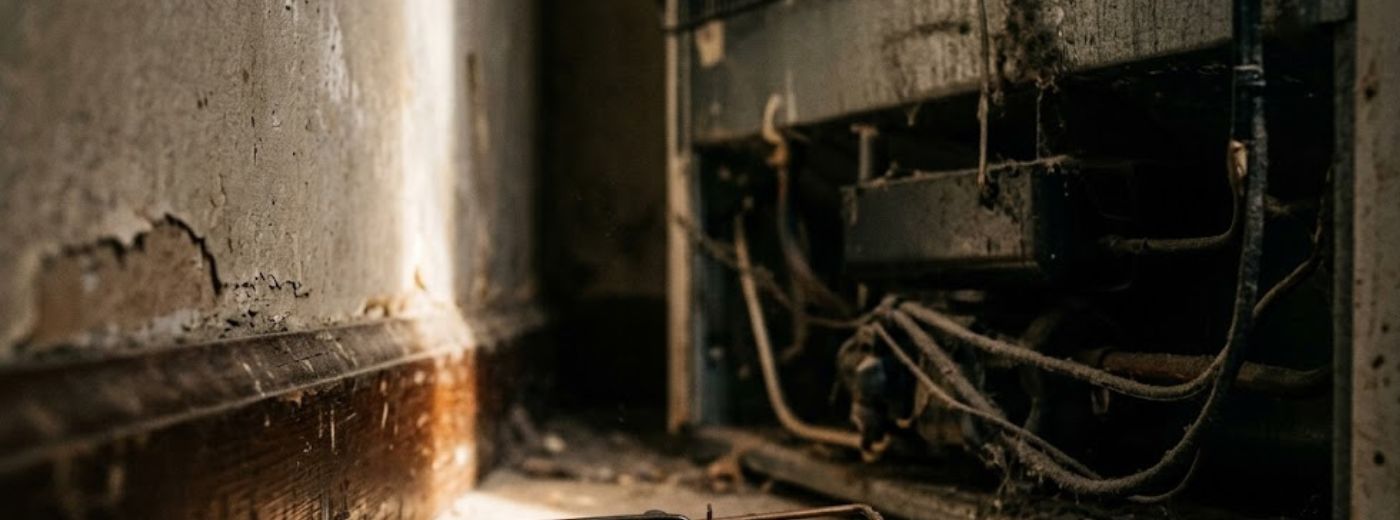
Mouse infestation treatment in Macon, GA
Multi-visit programs for established house mouse populations in Macon homes, wall voids, attics, crawl spaces, and kitchens. When one trap isn't enough, this is the program that actually clears it.
Multi-visit programs for established house mouse populations in Macon homes, wall voids, attics, crawl spaces, and kitchens. When one trap isn't enough, this is the program that actually clears it.
Mouse infestation treatment in Macon, GA is our structured multi-visit program. We run it when the problem is beyond a single contained entry. When mice are active in multiple rooms. Nesting in wall voids or attic insulation. Or when a population has been building for months in an older Bibb County home with a crawl space. The difference from standard mice control is severity and spread. A single mouse in a garage gets one visit and a few traps. An established infestation with nightly wall activity, droppings in the kitchen and two other rooms, and evidence of nesting in the crawl space insulation gets the full program: multiple visits, systematic trap coverage, entry-point sealing with humidity-resistant materials, and a confirmed-clearance follow-up before we close the job.
Mouse infestations in Bibb County tend to escalate faster than homeowners expect, because Macon's subtropical climate removes the cold-weather brake that limits mouse reproduction in most of the country. In Ohio or Tennessee, a mouse population that establishes in October peaks by December and starts to drop in February as cold suppresses breeding. In Macon, that same population breeds continuously from October through February. By spring it's three times the size it was when you first noticed it. Understanding where your infestation sits on the severity scale matters because it sets what kind of program is needed.
Droppings in one location. No wall-void noise. Single confirmed or suspected entry point. Recently established, weeks, not months. Standard single-visit mice control is right.
Droppings in 2–3 locations. Nightly wall or ceiling noise. Evidence of nesting in one area. Multiple likely entry points. Multi-visit infestation treatment program is right.
Droppings throughout the home. Crawl space or attic nesting confirmed. Multiple wall voids active. Population has been building for 3+ months. Full infestation treatment with potential attic or crawl space cleanup required.
Gnaw damage to wiring, structural members, or insulation visible. Large population across multiple floors. Older home with numerous entry points. Full treatment plus insulation replacement and sanitization may be needed.
The multi-visit structure matches the biology of an established infestation: the population has to be reduced through trapping before exclusion sealing makes sense (sealing an active population inside walls creates a worse problem), and clearance has to be confirmed after exclusion before the job closes.
Complete property inspection, droppings mapping, runway tracing, entry-point identification in kitchen, bathrooms, utility rooms, attic, and crawl space. Snap traps placed on every confirmed runway. Food source sanitation recommendations provided on site.
Traps collected and reset. Capture count and location recorded. Activity check, if trap hits are still high, we add coverage or reposition traps before moving to exclusion. For large infestations, this visit may run twice before exclusion begins.
All identified entry points sealed once trap activity drops to near-zero. Copper mesh, hardware cloth, foam backer, exterior-grade sealant, material selected by gap location and size. Humidity-tested for Macon's climate. Every sealed gap recorded for the follow-up inspection.
Inspection of all sealed entry points for integrity. Check for new activity signs, fresh droppings, new gnaw marks, new runway grease. If clearance is confirmed, the job closes. If new activity is detected, we reassess and schedule additional treatment at no charge within the 90-day warranty window.
The crawl space housing stock throughout North Highlands, Avondale, Bellevue, Lynmore Estates, Napier Heights, and Kings Park creates a specific mouse infestation pattern that's harder to clear than infestations in newer building. In a slab-on-grade home built in 2000, mice enter through a limited number of points, dryer vents, pipe penetrations, garage thresholds, and live mostly in wall voids and under appliances. The infestation is contained by the building's tight envelope.
In a pre-1970s Macon home with a crawl space, the mouse infestation has a separate hidden habitat that's warm, humid, undisturbed, and offers direct access to every room in the house through pipe chases. The crawl space population is the infestation's reservoir, trap every mouse in the kitchen and five more come up through the wall chase from the crawl space the next night. Treating a crawl space infestation without entering the crawl space, mapping the runways there, and sealing the foundation vents that allow access is treating the symptom rather than the source. We enter every crawl space on infestation treatment jobs.
An untreated mouse infestation builds damage fast. Faster than most homeowners realize. Gnaw damage to electrical wiring is a consistent behavior in wall-void infestations. It's the most serious risk. The reason: damaged insulation in a wall void creates a fire hazard. The hazard isn't visible until something ignites. Insulation that gets soiled with urine and droppings needs replacement. Not just cleaning. That's true in attics and crawl spaces. Food contamination from droppings in kitchen cabinets creates health risk. And the longer the population builds, which it does continuously in Macon's climate, the more structural access points the mice create through their own gnaw activity, making the eventual treatment more complex.
Multi-room infestation in newer building. 3 visits, snap trap program, exclusion of 3–6 entry points, confirmed-clearance follow-up.
Whole-house infestation with crawl space reservoir. 4 visits, full crawl space treatment, foundation exclusion, attic access if needed.
Long-established infestation with wiring or insulation damage. Full treatment plus coordination with insulation replacement and cleanup services.
Full inspection and infestation severity check. Written report and program recommendation provided. No obligation to proceed.
Want a real number for your situation? Call (844) 635-0403 for a free on-site inspection. Written quote before any work begins.
Droppings in multiple locations, gnaw marks on multiple food containers or structural materials, nightly noise in walls or ceilings on multiple nights, grease marks along multiple wall edges, and nesting material in wall voids or cabinet backs all shows an established infestation. A single mouse produces 50–75 droppings per day. If you're finding droppings in more than one room, you likely have more than one mouse.
A standard program runs 3–6 weeks from initial treatment to confirmed clearance: Visit 1 inspection and trapping, trap check at week 1–2, exclusion sealing at week 2–3, confirmed-clearance follow-up at week 4–6. Larger infestations in older homes may need an additional trap visit before exclusion.
No, not in Macon's climate. House mice breed year-round in Middle Georgia with no cold-weather population reset. An untreated infestation doesn't plateau; it grows. A mated pair can produce 8–10 litters per year with 5–8 pups per litter.
Infestation treatment is the multi-visit program for established populations, multiple rooms affected, wall void activity, confirmed nesting, possibly attic or crawl space involvement. Standard mice control refers to a single-visit treatment for a contained, recently detected problem. When droppings appear in three or more locations, that's infestation treatment territory.
No. There's no fumigation or chemical application requiring clearance. Snap traps are placed in low-traffic areas. Pets should be secured away from trap areas during the visit, but the home remains fully occupiable throughout.
Early-to-moderate infestations usually involve 5–20 mice. Infestations active for six months or more in older Macon homes with crawl spaces can reach 30–60 animals. Macon's subtropical climate and crawl space housing stock allow populations to grow larger before detection.
Not if exclusion work is complete. The outdoor mouse population doesn't disappear, but a properly sealed home with every dime-sized gap closed in durable materials prevents re-entry. The follow-up inspection at week 4–6 confirms no new entry points appeared.
Under Georgia landlord-tenant law, landlords are generally required to maintain habitable conditions including pest control for infestations. Document thoroughly with photos and deliver written notice requesting treatment. We can provide a written inspection report usable in that process. We're not attorneys and can't give legal advice.
Usually yes. Wall-void mice are accessed through the attic and crawl space, where snap traps are placed on their travel routes. Once the population is reduced we seal the entry points. Drywall opening is occasionally needed for dead mouse odor removal or very large populations in sealed voids.
Discard gnaw-damaged food in cardboard or thin plastic. Transfer undamaged dry goods to hard containers. Clear under-sink and cabinet-base clutter. Don't clean up droppings before the inspection, we need the distribution pattern to map the infestation correctly. Clean after the inspection.