Home · Services · Insulation Replacement After Rodent Damage
Insulation replacement after rodent damage in Macon, GA
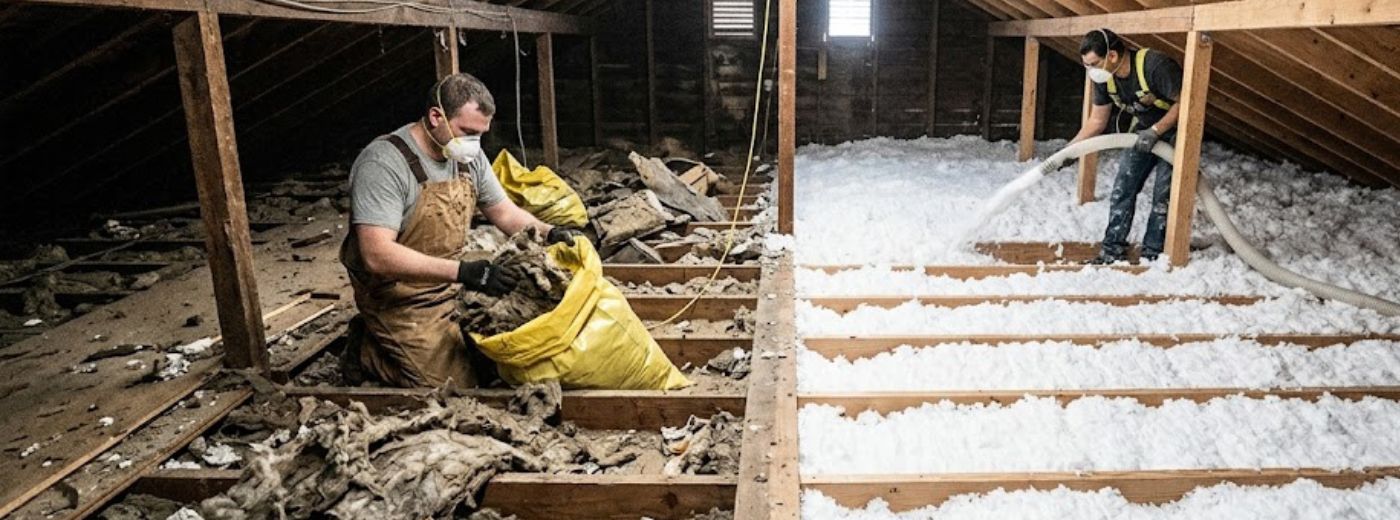
We remove the soiled insulation. We sanitize the attic surfaces. We line up Macon-area insulation contractors for the new work. This matters when enzyme treatment alone won't fix the smell and health risk from a long-running infestation.
Sometimes insulation replacement is the only option. That happens when a roof rat or mouse infestation has run long enough that the attic insulation can't be treated in place. Enzyme disinfectants work well. They neutralize germ residue and odor on structural surfaces. Enzyme treatment doesn't reach soiling that's deep in blown-in or batt insulation. The treatment stays at the surface. The urine compounds run through the full depth of the material. Sometimes the insulation itself is the source of a persistent ammonia smell. Or visible urine staining runs through the full material. In those cases, removal and replacement is the only lasting fix.
The honest scope split, what we do, what the insulation contractor does
We're transparent about the two-trade nature of this work. We do the soiled insulation removal and the attic surface sanitization. We carry the gear, training, and PPE for that phase. The actual insulation work, blowing in new cellulose or fiberglass, is specialized work. Insulation contractors do it better and faster than pest operators. We finish our phase. Then we line up a Macon-area insulation contractor for the new install.
The practical result: you'll get two quotes for a full replacement. One from us for removal and sanitization. One from the insulation contractor for the new install. We can help coordinate the sequencing so the insulation contractor's install visit happens promptly after our sanitization is complete and confirmed, rather than leaving a cleaned but uninsulated attic for weeks.
Full replacement program sequence
Rodent treatment
Active infestation cleared by trapping. Entry points sealed. Follow-up clearance confirmed before any cleanup begins.
Performed by: Macon Rodent Control
Contaminated insulation removal
All contaminated insulation vacuum-extracted or manually removed, bagged, and disposed of. Full attic cleared to structural surface.
Performed by: Macon Rodent Control
Attic surface sanitization
Enzyme disinfectant applied to all exposed structural surfaces, joists, decking, rafters. Odor compounds and pathogen residue addressed at the structural level before new insulation goes in.
Performed by: Macon Rodent Control
Clearance inspection
Attic inspection confirms sanitization is complete and surfaces are ready for new insulation. Written clearance provided to insulation contractor.
Performed by: Macon Rodent Control
New insulation work
Blown cellulose or fiberglass. We install to Georgia Energy Code minimums or what the homeowner asks for. We pick the insulation type based on attic layout and humidity.
Performed by: Macon insulation contractor
Insulation contamination signs in Macon attics
The clearest field signs that insulation needs replacement rather than treatment:
Visible yellow-brown urine staining throughout the insulation surface, not isolated spots but distributed discoloration across the insulation layer
Persistent ammonia smell in upper-floor rooms that continues after droppings removal and surface enzyme treatment, the source is in the insulation itself, not the surfaces we can reach
Dense nesting material embedded throughout the blown-in insulation layer, nesting that can't be extracted without removing the surrounding insulation
Insulation R-value visibly reduced by rodent compression, areas where insulation has been packed down from nesting activity over multiple seasons
Infestation active for 18+ months in a Macon attic, cumulative urine and dropping volume over this period almost always saturates blown-in insulation
Attic insulation contaminated? Removal + sanitization before new install.
Pricing for insulation removal after rodent damage in Macon
Small attic removal
$600 – $900
Under 1,000 sq ft footprint, conventional clearance, standard blown-in depth. Removal, disposal, and enzyme sanitization included.
Standard attic removal
$900 – $1,300
1,000–1,800 sq ft footprint. Most Bibb County single-family home attics. Removal, disposal, and full structural surface enzyme treatment.
Large or complex attic
$1,300 – $1,800
Larger footprint. Tight clearance. Multiple insulation layers. Or an attic shape that needs staged removal. Older historic-district homes often fall here.
New insulation work
Contractor quote
Priced separately by the insulation contractor based on R-value, insulation type, and attic footprint. We coordinate the timing and handoff.
What changes the actual number:
Insulation type currently in the attic
Square footage requiring replacement
Target R-value and whether code upgrade is part of the work
Whether the home qualifies for utility rebate programs
Want a real number for your situation? Call (844) 635-0403 for a free on-site inspection. Written quote before any work begins.
Insulation type guide: what's replaceable, what's recoverable
Not every insulation type responds the same way to rodent contamination. Knowing which type you have and how it's installed drives the decision between enzyme treatment and replacement. We assess this during the initial inspection, not after work has started.
Material or item
Salvageable?
Outcome or criteria
Blown cellulose (light surface contact)
Sometimes
Surface enzyme treatment is moderately effective
Blown cellulose (urine or nesting)
No
Replace; cellulose absorbs and retains urine indefinitely
Blown fiberglass (any meaningful contact)
No
Replace; fiberglass holds moisture and urine compounds in fiber
Fiberglass batts (clean appearance)
Sometimes
If no urine staining and no nesting, retain
Fiberglass batts (nest material visible)
No
Always replace; nest material indicates urine saturation throughout
Rigid foam board (surface contact only)
Yes
Wipe with enzyme cleaner, dries quickly
Rigid foam board (gnaw damage)
No
Replace; rodents have likely accessed the cavity behind
Spray foam (closed cell, surface)
Yes
Closed cell resists penetration; clean surface and continue
Spray foam (gnaw tunneling)
No
Cut out the affected section and re-spray
Rock wool or mineral wool
Sometimes
More resistant to retention than cellulose; case by case
Every materials decision goes in a written report before any removal. The decision protects both your records and any insurance documentation.
Frequently asked questions, insulation replacement after rodent damage
When does rodent-damaged insulation need to be replaced?
When: visible urine staining is distributed throughout the material; persistent ammonia smell continues in upper-floor rooms after surface enzyme treatment; nesting material is embedded throughout; R-value is a lot reduced by rodent compression; infestation was active 18+ months; or real estate disclosure requires recorded full replacement.
What's the full scope of insulation replacement after a rodent infestation?
We do three things. Remove and dispose of the soiled insulation. Treat attic surfaces with enzymes. Run a clearance inspection. New insulation work is performed by a Macon-area insulation contractor we coordinate with. We handle our phase completely and coordinate the handoff.
How much does contaminated insulation removal cost in Macon?
$600 to $1,800 depending on attic size, insulation depth, and access conditions. New insulation work by the contractor is separately priced.
Does homeowners insurance cover insulation replacement after rodent damage?
usually no, standard policies classify rodent damage as a upkeep issue rather than a covered peril. We can provide a written inspection report for your insurance company's review. We cannot predict coverage outcomes.
How long after a roof rat infestation should I wait before replacing insulation?
After the infestation is fully cleared and exclusion sealing is confirmed, usually after the follow-up inspection that closes the treatment program. Replacing insulation before sealing is confirmed is risky. New insulation can get soiled again. That happens when an active or unsealed problem remains.
What type of insulation should replace contaminated insulation in a Macon attic?
Blown cellulose or blown fiberglass are the standard options. Blown cellulose has better thermal performance in Macon's summer temperatures. Blown fiberglass is more moisture-resistant. The insulation contractor will recommend based on your attic's configuration. We defer to their expertise on product selection.
Do you remove crawl space insulation contaminated by rodents?
Yes. Crawl space batt insulation contaminated by Norway rat or mouse activity is removed and disposed of as part of our crawl space cleanup program. Re-work is coordinated with an insulation contractor.
Will new insulation prevent future rodent infestations?
No, insulation replacement doesn't prevent infestations. That's what exclusion sealing does. New insulation gives the attic a clean start, improves thermal performance, and removes scent markers that can attract rodents back. But if entry points aren't sealed, a new colony will access through the same gaps and contaminate new insulation within a season. Exclusion must precede insulation replacement.