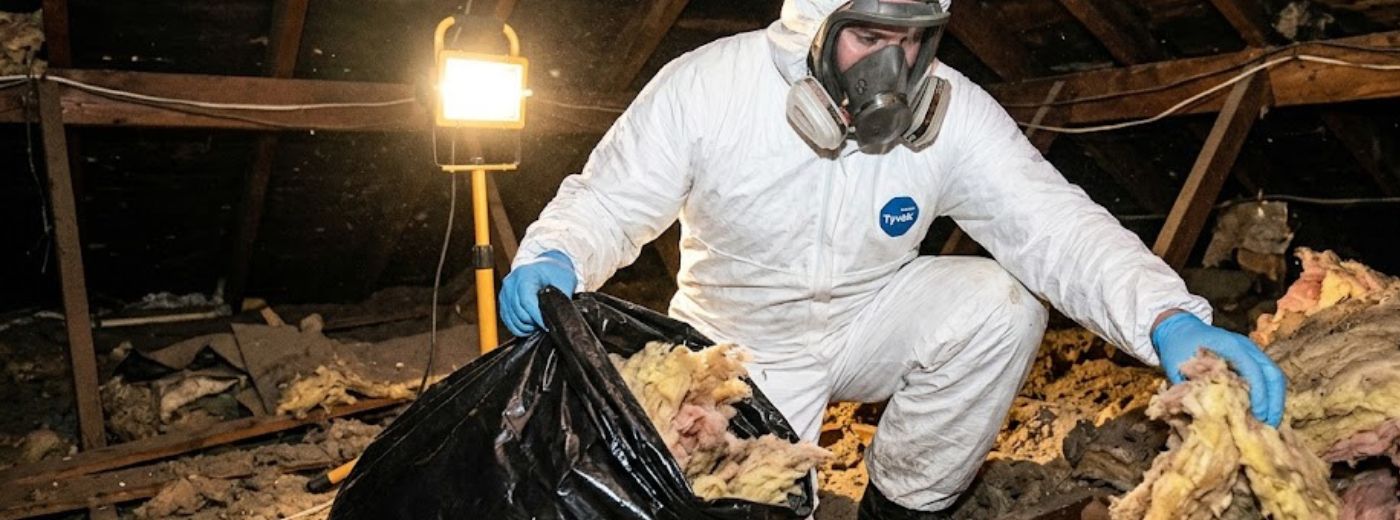
Two features of Macon's housing make attic rodent contamination heavier here than in newer building elsewhere. The first is the attic volume. Pre-1920s Macon homes usually have full-height attics with major cubic footage. A bungalow with a full second attic above the bedroom floor gives a roof rat colony big nesting territory. The same colony in a modern 6-inch rafter attic is forced into a much smaller space. More attic space means more contamination spread across more surface area.
The second is the insulation history. Many Macon homes have multiple insulation layers. Original blown insulation from the 1940s or 1950s. A second layer added in the 1980s energy-crisis era. Sometimes a third recent upgrade. A roof rat colony that's been in the attic for years has soiled each insulation level. Cleanup of the top insulation surface doesn't reach the lower layers. The odor from lower layers stays after surface cleanup. Knowing the insulation layer history is part of the attic check. We ask about renovation history. We look for layering evidence before recommending cleanup scope.
Droppings removal + enzyme treatment
$400 – $700
No insulation removal. Contained or light contamination. Smaller to medium attic with good clearance. Enzyme sanitization throughout.
Partial insulation removal + cleanup
$700 – $1,200
Contaminated insulation removed from affected zone(s). Structural surface enzyme treatment. Insulation replacement separately quoted.
Full attic decontamination
$1,200 – $1,800
Full insulation removal, complete structural surface enzyme treatment, HEPA cleanup throughout. Larger attics or long-established infestation. Insulation replacement separately quoted.
Free inspection
$0
Attic inspection with contamination check, insulation condition evaluation, and written cleanup scope recommendation before any work begins.
Attic materials: cleanup decision guide
Attic contamination decisions depend on layer depth and saturation. The visible surface tells you less than the cross-section. We probe to attic deck before scoping cleanup so you know the full picture, not just what shows from below.
| Material or item | Salvageable? | Outcome or criteria |
|---|
| Blown cellulose insulation (top-surface droppings only) | Sometimes | Vacuum surface plus enzyme treat; works only if caught early |
| Blown cellulose (urine staining at any depth) | No | Full removal and replacement; treatment cannot reach embedded contamination |
| Fiberglass batts (surface droppings only) | Sometimes | Vacuum plus enzyme; case-by-case |
| Fiberglass batts (urine saturation) | No | Remove and replace; fiberglass holds moisture for months |
| Attic decking (boards or plywood, surface only) | Yes | Vacuum, enzyme treat, seal with shellac-based primer |
| Attic decking (urine penetration into wood) | Sometimes | Heavy enzyme treatment plus odor block primer usually works |
| Roof rafters or joists (surface contact) | Yes | Treat in place, no replacement needed |
| Stored personal property in the attic | Case by case | Each item assessed; cardboard always discarded |
| HVAC ductwork running through attic | No | Pro duct cleaning if any droppings inside; often partial replacement |
| Recessed light cans, exhaust fan housings | Yes | Remove, sanitize off-site, reinstall with new gaskets |
Every materials decision goes in a written report before any removal. The decision protects both your records and any insurance documentation.
When is attic rodent cleanup necessary in Macon?
Cleanup becomes necessary when dropping accumulations affect attic air quality, when insulation shows visible urine staining or persistent ammonia odor, when nesting material is embedded throughout insulation, or when a real estate transaction requires recorded attic decontamination. Light infestations detected early may not require insulation removal, enzyme treatment in place is often enough.
Does attic cleanup require removing all the insulation?
Not always. We check contamination level on-site rather than defaulting to full removal. Contained or light contamination can often be addressed with droppings removal and enzyme treatment. Urine-saturated insulation, visible staining, persistent odor, or long-established infestations usually require removal.
How much does attic rodent cleanup cost in Macon?
$400 to $1,800 depending on attic size, contamination extent, and whether insulation removal is required. Droppings removal and enzyme treatment without insulation removal starts at $400. Full decontamination with insulation removal on a larger older home reaches $1,800 (insulation replacement is separate).
How long does attic rodent cleanup take?
Droppings removal and enzyme treatment: 2–4 hours. Partial insulation removal: 4–6 hours. Full attic decontamination with complete insulation removal: 6–10 hours, may require a second visit for insulation replacement.
What's the difference between attic cleanup and sanitization?
Cleanup is the physical removal of droppings, nesting material, and carcasses. Sanitization is the disinfectant and enzyme treatment applied after physical cleanup. Both are included in every attic cleanup visit.
Should attic cleanup happen before or after roof rat treatment?
After. Treatment first (trapping), then exclusion sealing, then cleanup. Cleaning before exclusion sealing means the cleaned attic gets recontaminated within weeks. Cleanup is the final step in the full program.
Can attic contamination affect my HVAC system?
Yes. HVAC air handlers in Macon attics draw air from the attic space during operation. A handler surrounded by rodent-contaminated insulation circulates contaminated attic air through the duct system. Replace the HVAC filter after cleanup and inspect the air handler housing if it's in the attic.
My attic smells like ammonia after a rodent infestation, what should I do?
Persistent ammonia smell usually shows urine-saturated insulation that enzyme treatment in place won't resolve. The source is embedded throughout the insulation material. Call for a free attic inspection, we'll check contamination level and give you an honest recommendation on whether spot treatment or full removal is right.