Roof rats. Rattus rattus, the smaller, more agile species that travels aerially rather than through burrows, are the primary rat species in Macon's historic neighborhoods of Vineville, Ingleside, Shirley Hills, and Bloomfield. They're the rat most likely to be in your attic, not your crawl space. They access homes through the roofline, not the foundation. And the warning signs are specific enough that most Macon homeowners can identify the situation before calling for an inspection.
The canopy is the access route, that's warning sign one
Before you ever hear anything or see any evidence, you can check your roof rat risk by looking at your trees. Roof rats travel aerially, they move from tree to tree and from tree to roofline without touching the ground. Any branch that comes within 3 to 4 feet of your roofline is a potential roof rat access route. In Vineville and Ingleside, where pecan and live oak canopy has grown for a century, virtually every home is within a branch-length of the roofline from at least one tree. If you have overhanging branches, especially over the soffit line or within reach of a gable vent, you have a roof rat access route regardless of whether you've seen any evidence yet.
Ceiling-level scratching at night, the clearest signal
The sound that most reliably shows roof rats rather than mice or Norway rats is scratching, scurrying, or rolling sounds in the ceiling, heard overhead at night, especially after 10 p.m. or before dawn. Roof rats are nocturnal and travel established attic runways repeatedly, so the sounds have a directional quality: you'll hear what seems like movement from one side of the attic to the other along a consistent path. A single loud thump is often a roof rat landing on attic decking. Sustained scratching in one location, without the directional movement, is more consistent with nesting behavior.
Attic dropping distribution, different from Norway rats
Roof rat droppings in the attic are usually concentrated along joist runways and in the corners and angles where the roof deck meets the wall top plate, the upper corners of the attic. Norway rat droppings in a crawl space concentrate at floor level and along the foundation perimeter. If your attic has dense dropping concentrations along the joists and at roof deck corners, with nesting material in insulation pockets nearby, that's the roof rat attic profile. If the droppings are at the attic floor level near the eave but also throughout the insulation layer, a longer-established colony may have saturated the insulation.
The fall cold-snap surge in Macon
The single most predictable roof rat event in Macon is the fall cold-snap surge, the spike in attic activity that occurs every October and November as the first sustained cool nights of the year arrive and roof rats that have been nesting in outdoor areas press deeper into warmed attic spaces. Macon homeowners in Vineville, Ingleside, and Shirley Hills who start hearing ceiling scratching for the first time on the first cool nights of fall are experiencing this surge. It's not a new infestation, roof rats that had access all summer are now more active and spending more time in the attic as temperatures outside drop. The surge reveals infestations that were quieter in summer. The right response is immediate inspection and treatment, not a wait-and-see approach. The population that settles in for winter will be much larger by January.
Grease marks at roofline entry points
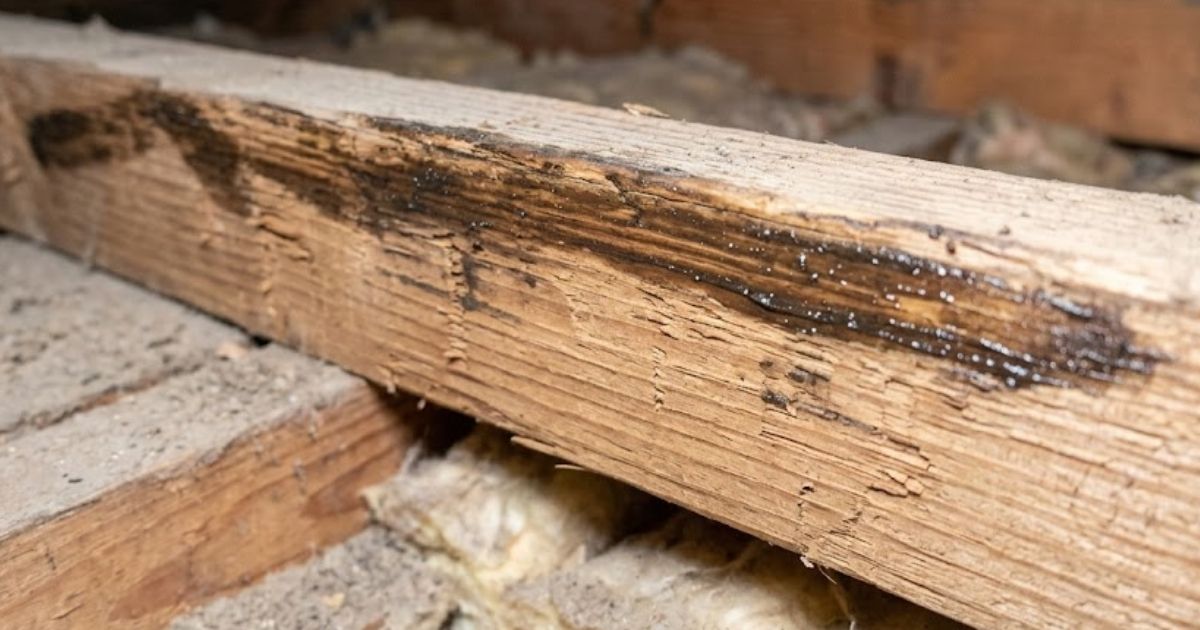
Roof rats that regularly use the same entry point leave dark grease marks, sebaceous secretions from their fur, on the surfaces they contact. On roofline entry points, look for dark smudging at the edges of gable vent screens, at the corners of soffit returns, along the gap where the fascia meets the soffit panel, and at any point where a consistent travel route contacts a surface. In Macon's humidity, grease marks don't dry out quickly and remain visible for weeks. If you can safely observe your roofline after dark with a flashlight, you may be able to watch roof rats traveling the routes where you've found grease marks.
The citrus and fruit tree signal
One Macon-specific roof rat signs that homeowners often miss: damage to fruit on backyard trees. Roof rats are skilled climbers and active foragers of citrus, persimmons, pecans, figs, and any other fruit-bearing trees in residential yards. A characteristic sign is fruit that has been partially eaten while still attached to the branch, with a distinctive curved bite pattern, rats hollow out citrus fruit through a small opening, leaving the peel intact on the tree as evidence. Pecans show shells with characteristic chewed openings. Persimmons and figs show partial consumption. If you've noticed unusual damage to your Macon backyard fruit production, especially damage that appears at night and progresses faster than what insects or birds would produce, roof rats foraging from a nearby canopy or roofline nest are likely. The fruit tree damage is often the first outdoor signs that homeowners notice before any structural evidence appears, especially for residents in Ingleside, Shirley Hills, and Bloomfield where backyard fruit trees are common.
Power line and utility line travel, the most underused early warning
Roof rats travel utility lines as readily as tree branches, power lines, cable TV lines, and phone lines crossing residential yards in Macon's older neighborhoods provide direct overhead access between houses. The diagnostic value: if a roof rat infestation is established in a Vineville or Ingleside neighborhood, you can often observe the rats traveling utility lines after dark with a flashlight. Stand in the backyard around 10-11 p.m., scan the utility lines crossing the yard with a strong flashlight, and you may catch rats traveling along the line silhouetted against the sky. This isn't a recommended detection strategy, but if you happen to see it, you have visual confirmation of the neighborhood-level pressure that's pressing against your roofline. It's also one of the reasons that addressing roof rat problems on an individual home in Vineville is genuinely difficult without exclusion: the entire neighborhood's utility line network is really one large roof rat highway, and your home is one of many destinations along that highway.
Bird feeder and pet food contribution
For Macon homeowners with bird feeders, outdoor pet food bowls, or compost areas with food scraps, these can a lot contribute to roof rat pressure on the property. Roof rats are excellent climbers and access bird feeders by climbing the support pole or the surrounding canopy. They forage from feeders during day and night, and the spilled seed below the feeder becomes a sustained food source supporting a population that then accesses the home for shelter. Outdoor pet food bowls left out overnight provide direct, high-calorie food sources. Compost piles with kitchen scraps function similarly. The practical recommendation: if you're addressing a roof rat problem, audit your outdoor food sources and either eliminate them or modify them (bring bird feeders in at night, feed pets indoors, secure compost properly). This won't eliminate the neighborhood-level population pressure, but it reduces the specific attractant on your property that's drawing rats to your immediate envelope.
The two-week verification window
If you suspect roof rat activity but want to verify before scheduling pro inspection, a two-week monitoring period with deliberate signs provides reasonable confirmation. Place small flour patches or talcum powder near suspected travel routes, soffit edges, attic hatch surroundings, areas where you've heard scratching. Check daily for tracks. Place small pieces of soft food (cheese, peanut butter on a cracker) in untouched corners of the attic and check daily for consumption or bite marks. Listen for scratching sounds at 10-11 p.m. and again at 4-5 a.m. Take photos of any droppings discovered so you can compare freshness over time. After two weeks of consistent signs in the same locations, you've established that activity is present and ongoing rather than transient. At that point, the pro inspection has confirmation to work from and can move directly to scoping treatment rather than spending time confirming the basic question of whether rats are present.
Spotted any of the roof rat signs above on your property? A free roofline-and-attic inspection confirms species and identifies entry points. Call (844) 635-0403.