Rat infestation evidence in Macon homes presents differently in summer than in cooler months. The combination of high ambient temperatures, sustained high humidity, and the biological reality that rats breed year-round in Middle Georgia's subtropical climate means that summer infestations in Macon develop faster and produce stronger evidence than the same situation in winter. If you know what to look for, summer is actually the easiest time of year to confirm an infestation, the evidence is harder to miss.
Droppings, the most reliable first signs
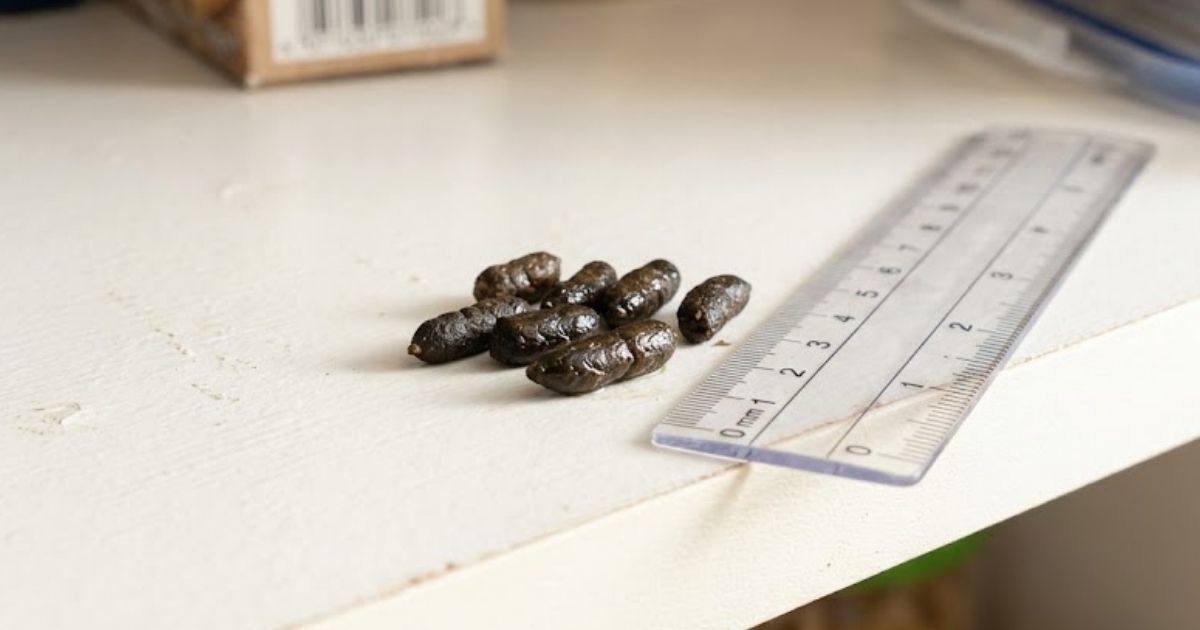
Fresh rat droppings are shiny black or dark brown, roughly the size of a grain of rice for mice (about 3mm) and considerably larger, pencil-eraser-sized, for Norway rats and roof rats. In Macon's summer heat, droppings in a warm attic or crawl space dry and lighten within 24 to 48 hours. Fresh droppings in an area you haven't checked recently shows active infestation. Old droppings that have been there a while are chalky gray or pale, still major as evidence of prior activity, but not confirmation of a current one.
Where to look in summer: attic corners and along joist runways (roof rats), crawl space corners and along the foundation perimeter (Norway rats), under the kitchen sink and behind appliances (mice), along wall-floor junctions in the garage.
Odor, intensified by Macon summer heat
Rat urine produces a sharp, ammonia-like odor that is a lot more intense in hot environments. An attic in Macon in July with an active roof rat colony reaches temperatures of 120 degrees or higher, high enough that urine compounds volatilize rapidly and the smell migrates downward into the living space through ceiling penetrations and HVAC returns. If you're noticing a persistent musky or ammonia-like odor in upper-floor rooms that worsens when the air conditioning runs, that's a strong signs of attic contamination, even if you haven't seen any other evidence.
Similarly, a crawl space Norway rat infestation in summer produces a persistent smell that rises into the first-floor living space through floor penetrations and HVAC supply returns. The "musty" smell many Macon homeowners attribute to humidity or crawl space moisture issues is sometimes, on closer inspection, Norway rat urine odor from an active crawl space infestation.
Sounds, timing tells you species
Rats are nocturnal, the sounds you're most likely to hear are after 9 or 10 p.m. and before dawn. What you hear and where you hear it tells you species. Scratching and rolling sounds in the attic ceiling overhead, especially along what sounds like a consistent path from one side of the attic to the other, is roof rat behavior. Scratching or thumping sounds at or below floor level, or in the crawl space, is Norway rat. Skittering sounds inside walls at any height is most commonly house mice, but can be Norway rats in wall voids at floor level. In summer, heightened rat activity, more foraging, more pup movement as new litters mature, means the sounds are more noticeable than in cooler months.
Grease marks and runways
Rats travel the same routes repeatedly and leave dark grease marks where their fur contacts surfaces. In summer, Macon's humidity keeps these marks visible longer than in dry conditions, they don't dry out and dust over as quickly. Look for dark smudging along wall-floor junctions, around pipe penetrations, and at the edges of attic joists. Grease marks confirm that the route is actively used; they don't distinguish between current and recent past activity without other supporting evidence.
Summer breeding acceleration
Macon's year-round subtropical climate means rats breed without a cold-weather pause. In summer, with food availability high and temperatures warm, breeding activity peaks. A pair of roof rats that established in your attic in spring will have produced two or three litters by midsummer, each with 5 to 8 pups. The population growth curve in a Macon attic during summer is steep, what was a small, barely noticeable infestation in April is a well-established colony by July. The practical implication: don't wait on summer rat evidence. The cost and complexity of treatment rises with every week of delay during peak breeding season.
Pet behavior as a leading signs
One of the most underused infestation signs in Macon homes is pet behavior, especially dogs and cats responding to rodent activity that homeowners haven't yet detected. Dogs that suddenly become interested in specific walls, baseboards, or ceiling areas; cats that stare intently at a wall void or perch near a heat register; either species becoming alert at consistent times of evening, these are all responses to sounds and scents from rodent activity that humans can't yet perceive. In summer, when windows are usually closed for air conditioning and household ambient sound is masked by HVAC operation, pets often pick up rodent activity weeks before the homeowner notices anything directly. Pay attention if your pet has developed a new fixation on a specific spot in the house. It's not always a rodent, but it's often an early signal worth investigating.
A specific Macon change: cats and dogs in multi-story homes sometimes show ceiling fixation, looking up at a specific spot on the ceiling, sometimes pacing beneath it. This usually shows roof rat activity in the attic above, with the pet picking up either the sounds of movement or the scent of rodent urine accumulating in the insulation. Ceiling fixation in a pet is a strong signs for an attic inspection even in the absence of any audible evidence to the homeowner.
The HVAC return air signal
Macon's summer AC use creates a specific diagnostic opportunity. The HVAC return air path becomes a concentration point for rodent contamination odors. If you notice that the air coming from your HVAC vents has a different smell when the system kicks on after being off for several hours, especially a slightly musty, ammonia-tinged, or organic odor that dissipates as the system runs, this often shows rodent activity in the duct system or in the wall cavity adjacent to the return air path. The odor accumulates while the system is off, then is pulled through the return and distributed briefly when the system starts. Replacing the HVAC filter resets this temporarily but doesn't address the source. If the smell returns within a few weeks of a fresh filter, the air handler housing and the surrounding wall cavity need inspection.
The seasonal calendar. Macon-specific timing
Different rodent species in Macon show seasonal evidence patterns that help with identification. Roof rats peak in late winter and early spring (February through April) when winter nesting cycles produce the most evidence and pups born in the winter cohort become active. Norway rats peak in fall and after major rain events as outdoor populations seek shelter and post-flood displacement events drive them indoors. House mice are most active in late summer and fall as breeding compounds and outdoor populations expand into homes. If you're noticing evidence in March, roof rats are the leading suspect. Evidence appearing immediately after a heavy August storm in East Macon points to Norway rat displacement. New activity in October across a single-family home in Avondale is most likely the fall mouse expansion. These calendar associations aren't deterministic, but they help prioritize the inspection focus.
When to escalate from monitoring to treatment
Many Macon homeowners hesitate over one question. When should self-monitoring become a pro call? Our recommended threshold: any of the following warrants immediate pro inspection. No other factors needed. First, fresh droppings in any food prep area. Kitchen. Pantry. Dining area. This is a contamination event. Not a monitoring issue. Second, evidence of activity in a child's bedroom or play area, where contamination risk to children is the priority. Third, the appearance of dead-rodent odor in any wall or ceiling cavity, this shows a carcass that needs pro removal. Fourth, visible gnaw damage to wiring, plumbing, or structural elements. Fifth, any evidence of activity in the attic in late summer, the timing suggests an established colony with the breeding capacity to grow a lot before fall, and early intervention is much cheaper than late intervention. Below these thresholds, monitoring and minor self-treatment may be right. At or above these thresholds, the pro inspection is the right call.
Summer humidity sustains rodent activity that other climates pause in colder months. If signs are showing up, phone (844) 635-0403 for a free five-zone inspection.