After inspecting several hundred Bibb County homes over years of rodent control work, certain entry points appear so consistently that they've become predictable by building era and neighborhood. Knowing where to look, and where most operators don't look, is the starting point for understanding why some rodent problems are solved by one good exclusion program and others keep recurring despite repeated treatments.
1. The mudsill-to-foundation gap
The single entry point that appears most consistently on older Macon crawl space homes, and the one most reliably missed by operators who don't enter the crawl space. The mudsill joint, where the sill plate rests on the concrete block foundation, widens progressively on Macon's high-clay soil as the foundation settles relative to the framing above it. On a 30-year-old home this may be a 6mm gap (mouse-accessible). On a 70-year-old home it may be 15mm or wider (Norway rat-accessible). It's only visible from inside the crawl space, looking up at the sill plate-to-foundation junction. If it hasn't been sealed with copper mesh and exterior sealant, it's almost certainly open.
2. Foundation vent screens
The aluminum or galvanized steel screens covering foundation vent openings corrode, warp, and crack on Macon's humid climate timeline faster than in drier regions. A foundation vent screen that passed a visual inspection five years ago may have a stress crack at the corner or a separation at the frame joint that's large enough for mouse entry. We check each vent screen from both the exterior and the crawl space interior, the interior view often reveals damage that's not visible from outside.
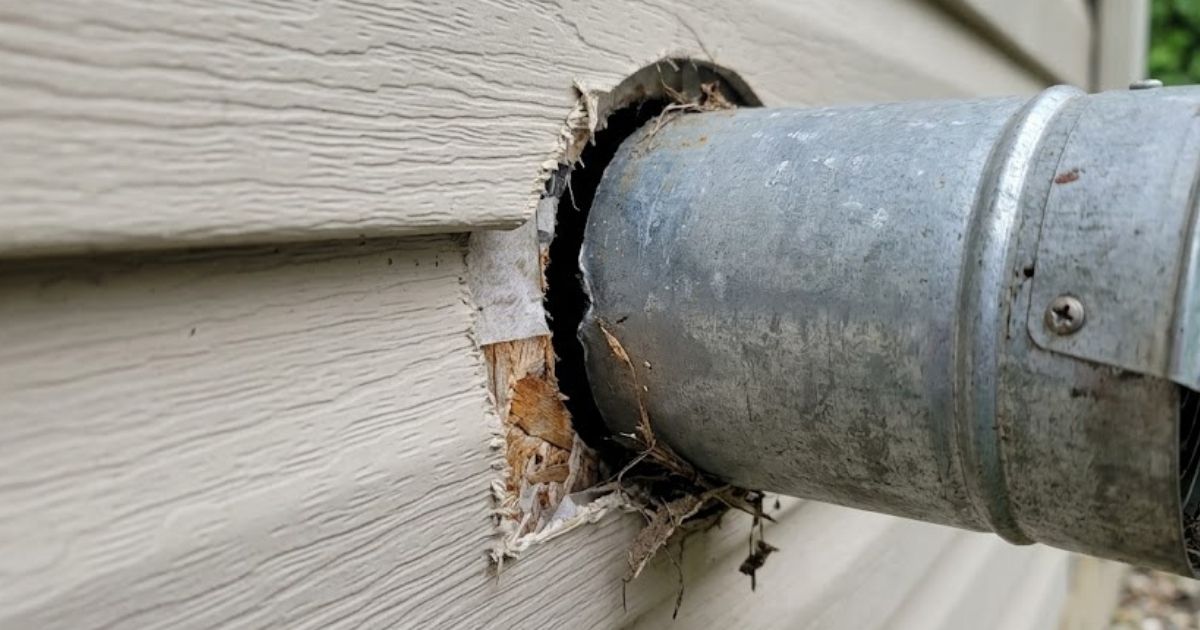
3. Dryer vent duct gap
The dryer exhaust duct passes through the exterior wall through a circular cutout that's usually larger than the duct itself. The gap between the duct and the wall opening, a ring-shaped void that runs all the way around the duct, is almost never sealed at work and is almost always accessible to mice. Typical gap: 8 to 20mm. Fix: a dedicated dryer vent cover plate that closes the gap, or copper mesh packed around the duct and sealant-finished at the wall face.
4. HVAC line-set wall penetration
Where refrigerant lines enter the exterior wall to reach the indoor air handler, the penetration is almost never sealed by the HVAC installer, the bundle of refrigerant lines, electrical, and condensate drain is smaller than the hole cut for it, leaving a gap that mice use reliably. In Macon's older housing stock, these penetrations may have been there for 20 to 30 years without ever being addressed. Typical gap: 10 to 25mm.
5. Gable vents, both faces
Gable vents on older Macon homes, the louvered vents on the triangular end walls of the attic, were screened originally, but the screens corrode and fail. We inspect both the east and west gable vent faces on every inspection because roof rats probe all accessible faces. A gable vent with failed screening on one face while the other is intact still provides access on the failed side. Re-screening with hardware cloth or replacing with a rodent-resistant vent cover closes both.
6. Soffit-to-wall trim separation
On pre-1970 Macon homes where fascia and soffit trim boards have pulled away from the wall surface through decades of thermal cycling and settling, the gap between the trim board edge and the wall face exposes the wall cavity to entry. This appears most consistently on homes with wood soffit and fascia systems rather than aluminum replacement panels. Visible from the exterior at close range; accessible to mice and sometimes to smaller roof rats.
7. Ridge vent gaps, visible from inside the attic
Pre-1970 Macon homes with wood-shingle ridge vent systems, assembled on-site from individual boards rather than prefabricated ridge caps, have gaps between the boards that are visible from inside the attic as daylight. These gaps are roof rat entry points that are invisible from the ground. Interior attic inspection looking up toward the ridge is the only way to find them. We check the ridge from inside the attic on every inspection of pre-1970 building.
8. Gas pipe wall penetrations
Natural gas lines entering through the exterior wall at the range, dryer, or water heater are installed by the utility, not by a pest control-aware contractor. The pipe is smaller than the hole cut for it. The gap is almost never sealed at work. On every Macon home with gas service, there is at least one gas pipe wall penetration that has never been closed, usually at the range or dryer location on the exterior wall. Typical gap: 6 to 15mm.
9. Garage door threshold seal
The bottom of a residential garage door is supposed to seat tightly against a threshold strip, usually rubber or vinyl, that creates a seal against rodent entry. Over time, this threshold strip wears, hardens, cracks, and develops gaps. On most Macon homes with garage doors over 10 years old, the threshold seal has at least one major gap that allows mouse entry, often into the garage interior and from there into the home through interior connecting doors. The wear is accelerated by Macon's humidity cycle (UV exposure plus repeated wet-dry cycles). Threshold strip replacement is straightforward and inexpensive, usually a homeowner-level fix, but it requires knowing to look. The garage interior should be inspected during any exclusion engagement to identify gaps at the threshold and at the door side seal channels.
10. AC condensate drain line exit
Where the air conditioning condensate drain line exits the exterior wall to discharge condensate, the wall penetration is usually a 1-inch hole drilled through the wall for a 3/4-inch PVC pipe. The gap around the pipe is rarely sealed at work. The condensate water itself acts as a moisture attractant, and the pipe gap provides an entry point. This is a specific category of entry that homeowners almost never check. The fix is simple: copper mesh packed around the pipe at the wall face and finished with exterior sealant. The condensate flow continues unobstructed through the pipe interior.
11. Attic access hatch frame
For homes with an attic access hatch in a hallway or closet ceiling, the hatch frame usually has a small gap between the framed opening and the surrounding drywall. This gap is small (often 2-4mm) but can be enough for mouse entry from the attic into the living space. The location is especially major because the access hatch is often in a frequently used hallway or closet where any evidence (droppings, food trail, sounds) directly affects the household. Sealing the access hatch frame from the attic side with mesh and sealant addresses this category.
12. Fireplace flashing, masonry and frame junction
Macon homes with masonry fireplaces have a junction where the brick or stone chimney structure meets the home's framed wall and roof. This junction is sealed with flashing, usually metal, but the flashing can separate from either the masonry or the framing over time, opening gaps. From the exterior these gaps may be visible as openings at the chimney-to-wall junction or chimney-to-roof junction. From the interior they connect to the wall cavity adjacent to the chimney chase. Inspection of fireplace flashing is part of the roofline check on any home with a masonry fireplace, and seal failures here are surprisingly common on older Macon homes.
The inventory effect, why a complete list matters
A homeowner reading this list might address one or two of the entry points described and feel that major work has been done. The reality of exclusion math is that the rodent population probes every accessible gap continuously, addressing two entry points while leaving five others open produces minimal practical improvement because the rats use the remaining gaps. The value of full inspection is exactly that it produces the complete list, allowing exclusion work to address the full attack surface rather than just the most visible portions. The most common pattern we encounter on follow-up calls is a homeowner who did self-exclusion on the obvious entry points (the foundation vent, the dryer vent) and is frustrated that activity has continued. The cause is almost always the entry points they didn't know to check, the ridge vent gap visible from the attic interior, the gas pipe penetration at the range, the mudsill gap that requires crawl space entry to find. full pro inspection is the difference between exclusion that produces results and exclusion that produces continued frustration.
Not sure which entry points are active on your property? The free inspection identifies every accessible one and ranks them by priority. Call (844) 635-0403.