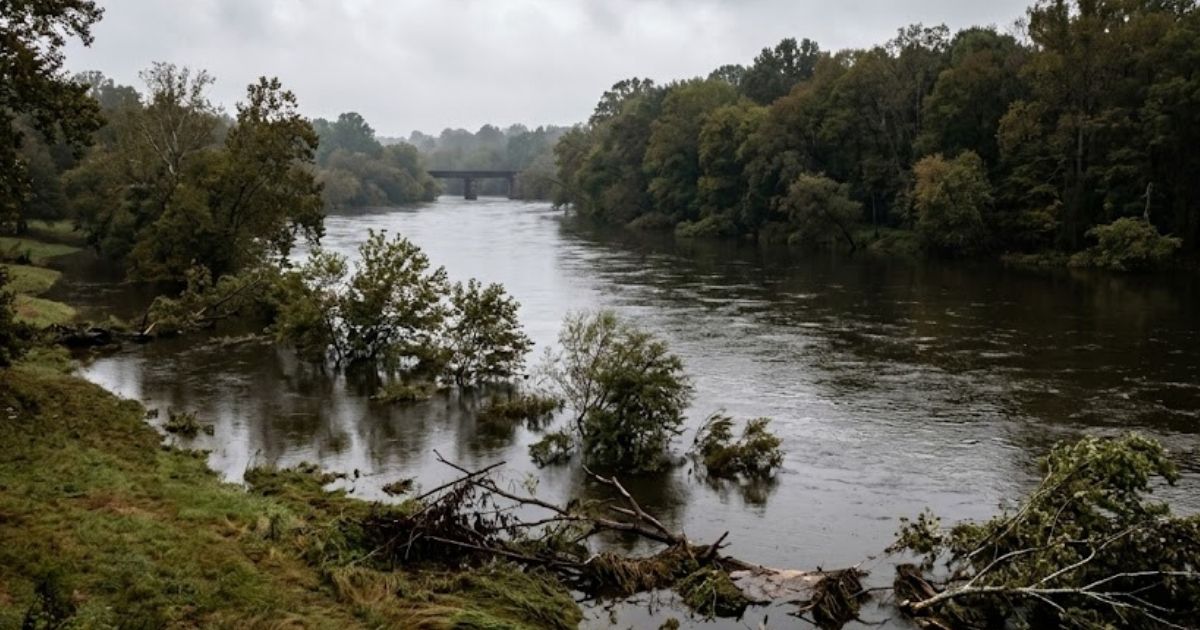
The connection between heavy rainfall and rat entry in Macon is not coincidental, and it's not about rats seeking dry shelter in the abstract sense. It's about a specific biological mechanism: when the Ocmulgee River rises a lot, Norway rat burrows on the lower river banks flood, and the displaced population, maybe hundreds of animals from a large, established bank colony, presses into the adjacent residential and commercial blocks looking for new nesting habitat. The 48 to 72 hours after a major Ocmulgee rise is the highest-risk window for Norway rat entry attempts in East Macon, Fort Hill, and the downtown commercial zone adjacent to the river.
Why the Ocmulgee corridor sustains such a large Norway rat colony
The Ocmulgee River corridor between the downtown commercial blocks and East Macon's residential streets is ideal Norway rat habitat: elevated-moisture soil on vegetated banks above the waterline, proximity to food sources in the surrounding urban environment, and drainage system that provides protected travel routes into adjacent blocks. This is a lasting colony, it doesn't seasonally disappear and doesn't depend on any specific building for its existence. It's been established in this location for decades, and the individual rats that get displaced by any given flood are quickly replaced by new animals from the surrounding population.
The 48-72 hour displacement window
When Ocmulgee water levels rise enough to flood bank burrows, Norway rats don't immediately enter buildings. They initially move to higher ground within the corridor, vegetated banks above the flood line, adjacent parks and green spaces, raised commercial areas. But within 48 to 72 hours, as the displaced population exhausts available outdoor shelter, the pressure shifts toward building foundations. This is the window when East Macon and Fort Hill homeowners notice sudden activity: fresh burrow holes near the foundation that weren't there before the rain, crawl space sounds that started this week, droppings along foundation vents that were clean on the last check. These aren't signs of a long-established infestation, they're signs of a displacement event in progress.
Why acting in the displacement window matters
A displaced rat population that hasn't yet established nesting inside a structure is a lot easier to address than an established crawl space colony. In the displacement window, rats are probing, exploring, and in some cases newly entering, they haven't built nests, raised litters, or established the runway patterns and scent markers that make a colony more persistent. Snap trap placement during the displacement window catches the active population before it settles. Exclusion sealing performed immediately after the displacement event closes the gaps while the pressure is highest. Waiting two to three weeks, until the infestation is audibly obvious and the population has had time to breed, means treating an established colony rather than a displaced one.
What East Macon and Fort Hill homeowners should do after heavy rain
In the 24 to 48 hours following any rain event that produced major Ocmulgee flooding, walk the perimeter of your foundation and look for fresh signs: new burrow holes (fresh soil disturbance at the foundation perimeter), fresh droppings near foundation vents, or evidence that a vent screen has been pushed or chewed at its edge. If you find any of these, call immediately. Don't wait for the sounds to become obvious or the droppings to accumulate, the displacement window is the best treatment opportunity. An inspection in the 48 to 72 hour post-flood period gives us the best chance of placing traps while the population is actively probing rather than after it has settled into nesting.
What about roof rat and attic activity after rain?
Heavy rain has a different effect on roof rats in Macon's historic canopy neighborhoods. Rain events don't flood roof rat nest sites (attics), but sustained wet weather followed by the first cool nights usually coincides with increased attic activity as roof rats seek more fully sheltered nesting positions. If you're in Vineville, Ingleside, or Shirley Hills and you notice increased ceiling scratching in the days following heavy rain and cooler temperatures, this is the roof rat equivalent of the flood-displacement pattern, not flooding, but weather-driven behavioral change that increases attic occupation. The treatment response is the same: don't wait, call for an inspection during the period of increased activity.
Reading the Ocmulgee flood gauge
For East Macon, Fort Hill, and downtown-adjacent property owners, one tool helps most. The Ocmulgee River gauge data from the US Geological Survey. It's the best way to see displacement events coming. The Macon gauge reading is online. It updates all the time. The threshold for meaningful Norway rat displacement is usually a rise of 6 to 8 feet above the normal low-flow level. That's enough to flood lower bank burrows. It's well below true flood stage. Watching gauge readings during and immediately after rainfall events gives property owners 24-48 hours of advance notice that displacement pressure is building. Combined with knowledge of your property's exposure (distance from the river, presence of crawl space, existing exclusion condition), this lets you trigger a preventive inspection during the displacement window rather than waiting for indoor evidence to confirm what the gauge data already suggests.
The first-floor flood, a separate but related event
For Macon properties that experience actual interior flooding from extreme weather events, rodent contamination is a near-universal consequence that homeowners often don't anticipate. The mechanism: floodwater carries Norway rat urine and feces from the soil environment and bank habitat into the building, contaminating drywall, flooring, and any porous materials at the flood line. After the water recedes, the contamination remains. Hantavirus and leptospirosis risk in flood-damaged Macon properties is meaningfully elevated, and post-flood remediation should include not just water damage repair but rodent contamination check of all affected materials. Insurance settlements for flood damage in Bibb County properties should include rodent contamination remediation in the scope. We've worked on multiple post-flood Macon properties where the rodent contamination check dramatically changed the scope of the remediation that insurance ultimately approved.
Hurricane and tropical storm timing
Macon sits far enough inland that direct hurricane impacts are rare, but tropical storm remnants reaching the Middle Georgia region from the Gulf Coast produce major rainfall events 2-3 times per typical season. These late-summer and early-fall events overlap with peak Norway rat outdoor population density, meaning displacement events triggered by tropical storm remnants tend to be larger and produce more sustained pressure than equivalent rainfall earlier in the year. Property owners in East Macon and along the Ocmulgee corridor should treat any tropical system tracking through Middle Georgia as a likely displacement trigger and schedule preventive inspections within 48 hours after the rainfall ends. The combination of high outdoor population density and major flood-displacement pressure makes the September-October tropical season the highest single-cluster risk period for downtown Macon Norway rat events.
Roof damage from storms, the secondary entry pathway
Beyond the river flooding path for Norway rats, heavy storms create a separate roof rat entry path. Wind and rain damage to rooflines. That opens new entry points. A storm can do several things. Lift ridge cap shingles. Damage soffit panels. Break branches that fall on roof areas. Each creates fresh entry chances that didn't exist before the storm. Roof rats find and use these openings within days. Homeowners in Macon's canopy-heavy neighborhoods should walk the roofline visually (or from photos taken with a phone camera held overhead) within a few days of any major storm event to identify damage that needs prompt repair. Storm-driven entry points often produce the surprising winter roof rat infestations, properties that were rodent-free for years suddenly develop attic activity in the months following a hurricane-season storm because the storm created an opening that wasn't there before. Documenting roof damage promptly is both an insurance claim thinking about and a rodent prevention measure.
Just had a heavy rain event and now hearing scratching? Call (844) 635-0403 for a same-day inspection — post-storm displacement is one of our most common call types.