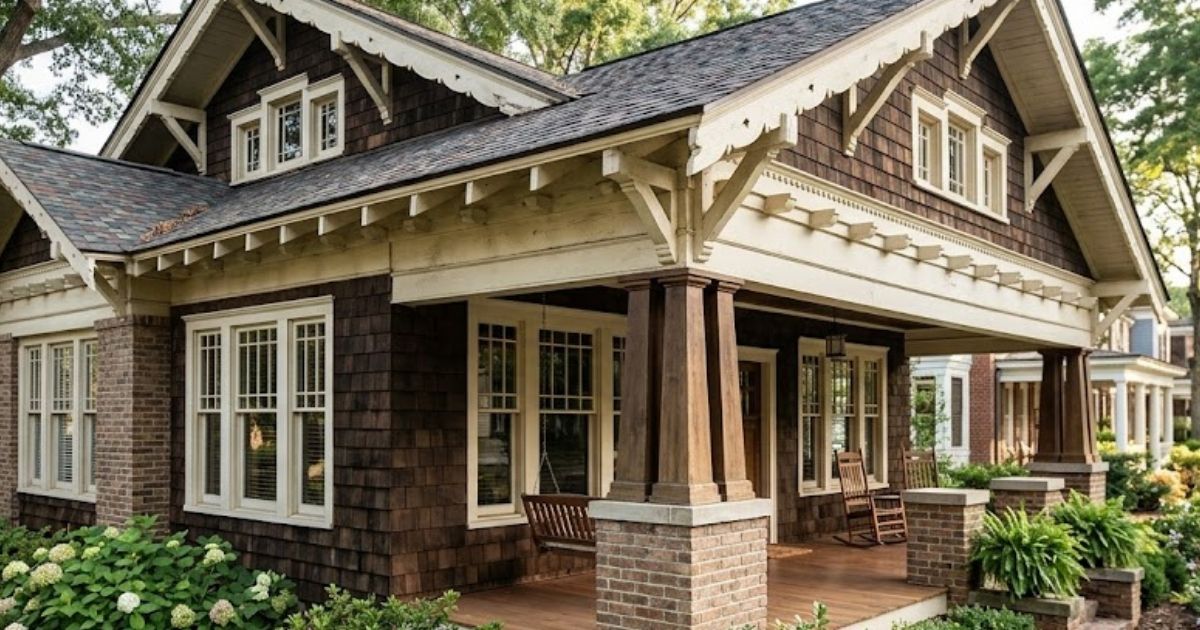
Rodent control advice that's written for generic American residential building often doesn't apply accurately to Macon's older housing stock. A guide written for a 1995 slab-on-grade suburban home in any US city will have you looking for 4 to 6 entry points. A thorough inspection of a 1915 Vineville bungalow will usually document 10 to 16. The building era is the key variable, and Macon's historic districts have some of the oldest residential housing stock in Middle Georgia.
Know your framing type before you treat
The single most important building characteristic for rodent control in older Macon homes is the framing type. Homes built before about 1940 in Macon are usually balloon-framed: exterior walls run continuously from the foundation sill plate to the roof ridge with no horizontal blocking between floors. A mouse that enters a first-floor wall void in a balloon-framed Macon bungalow can travel unobstructed to the attic and down to the crawl space. Treating the kitchen without treating the attic and crawl space simultaneously misses most of the infestation. If your home was built before 1940, assume balloon framing until the inspection confirms otherwise, and set your traps at all three levels from the start.
The mudsill gap, the most consistently missed entry point
On Macon's older crawl space homes, the gap between the sill plate and the concrete foundation block, the mudsill joint, is consistently one of the largest single rodent entry points, and the one most commonly missed by operators who don't enter the crawl space. Decades of soil movement on Macon's high-clay soil open this joint progressively. By the time a Vineville or North Highlands home is 60 to 80 years old, the mudsill gap may be wide enough for Norway rat access, not just mice. You cannot see this gap from the exterior. An operator who doesn't enter your crawl space will not find it. If you've had repeat mouse problems in an older Macon home despite multiple pest control visits, the mudsill gap is the first thing to suspect.
Heritage-compatible materials for original wood surfaces
Expanding foam is the go-to exclusion material for most pest operators because it's fast and cheap. On older Macon homes with original wood building, heart pine sill plates, old-growth fir rafters, original fascia boards, expanding foam is a problem. It bonds for good to old-growth wood and removes with the wood fiber when you try to take it off. For any gap in original wood building on a historic Macon home, copper mesh pressed into the gap and finished with a paintable exterior sealant is the correct approach. It's more labor-intensive and more expensive, but it doesn't damage original material and it's reversible if future work requires access to the gap.
The roofline inspection for pre-1930 homes
Pre-1930 Macon homes have roofline features that newer building doesn't: wood-shingle ridge vents assembled on-site from individual boards (not prefabricated ridge caps), open soffit returns under decorative fascia boards rather than closed aluminum soffit panels, and wooden louver gable vents that have been weathering for a century. Each of these is a potential roof rat entry point, and none of them is visible from a single ground-level vantage point. A thorough roofline inspection for a pre-1930 Macon home requires check from the ground, at eave level, and from inside the attic looking outward, all three perspectives are necessary to find every gap. Any operator who does only a ground-level walkthrough on a historic Macon home is not doing a complete inspection.
Annual inspection as ongoing upkeep
The most cost-effective rodent control approach for older Macon homes is annual inspection, not necessarily annual treatment, but annual inspection to catch new gaps before they become infestations. Older homes shift, settle, and weather continuously. A gap that wasn't present two years ago may be open now. An annual inspection that finds and seals a new mudsill gap or a new soffit separation before any rat discovers it costs far less than treating the infestation that develops if the gap is ignored for another year. For Vineville, Ingleside, and North Highlands homeowners especially, this is the upkeep approach that keeps rodent costs predictable and manageable over the long term.
The chimney as an overlooked entry point
Macon's older homes often have masonry chimneys. The pattern is strongest in homes built before 1950. These chimneys often give rodent access. Homeowners rarely think to check them. The chimney offers two separate entry paths. The first is the chimney top itself. Damaged or missing chimney caps let roof rats drop into the flue. From there they reach the firebox. In homes with unused fireplaces sealed at the flue damper, they reach the attic space behind the chimney. The second is the chimney chase, the framed enclosure that wraps the masonry chimney through the attic and walls. On older homes, the framing-to-masonry junction often has gaps that allow attic rodents to access wall cavities running alongside the chimney structure. Inspection of both the chimney top (requires roof access or photo from below with telephoto) and the chimney chase from inside the attic should be standard for any home with a masonry chimney.
Porch substructure, the often-ignored crawl space
Many older Macon homes have front porches with their own substructure, a separate framed crawl space beneath the porch deck, often poorly ventilated and rarely accessed by homeowners or pest operators. This substructure is really a lasting Norway rat habitat in many older homes: dark, humid, undisturbed, with established entry routes from the surrounding landscape. The porch substructure connects to the main home through floor joist bays and through any utility penetrations running from the porch foundation into the home's interior. We always check porch substructures on older Macon homes, usually by removing a lattice panel and visually inspecting with a flashlight. The condition we find regularly: heavy Norway rat activity (droppings, burrow soil, nesting material) that the homeowner had no idea was there. Treating the main house without addressing the porch substructure is incomplete work on these properties.
Brick veneer weep gaps, the entry homeowners can't see
Older Macon homes with brick veneer building, common from the 1920s onward, have weep gaps designed into the bottom course of brick to allow drainage and ventilation behind the veneer. These gaps are sized for water drainage, not rodent exclusion, and a single weep gap can serve as a mouse-sized entry to the cavity between the brick veneer and the wood structural wall. From that cavity, rodents can access the wall void through any framing gap, plumbing penetration, or electrical opening. Sealing weep gaps is delicate work, they exist for a structural reason and shouldn't be for good closed without addressing the moisture-management function. The correct approach is stainless-steel weep vents or specially designed rodent-resistant weep covers that allow drainage while excluding mice. This is a small detail that's almost never addressed in standard pest control work but matters a lot on older Macon brick homes.
The cumulative effect, why exclusion compounds
A useful mental model for older-home rodent control. Each entry point sealed cuts annual rodent pressure on the home by some amount. A single major entry point sealed may drop activity 30% or more. Sealing five secondary entry points after the major one may add another 25%. Sealing the rest of the minor gaps may add another 15%. The cumulative effect of full exclusion is dramatic. The home goes from an open invitation to a hard target. But the math runs the other way too: leaving any major entry point open after sealing minor ones produces minimal improvement. A homeowner who has done major exclusion work but still has one unsealed mudsill gap is really in the same situation as a homeowner who has done nothing. The full inventory matters because the full inventory is what sets result. This is why we always document every gap on the inspection report rather than just the ones we're treating in the current visit, the homeowner needs to see the full picture to make informed decisions about how full their program needs to be.
Older Macon home with active signs of rodents? Call (844) 635-0403 for a free heritage-aware inspection — five zones, written report, no obligation.